


American Blunt Message to Kagame: Get Out of the DRC and End Your Support to M23
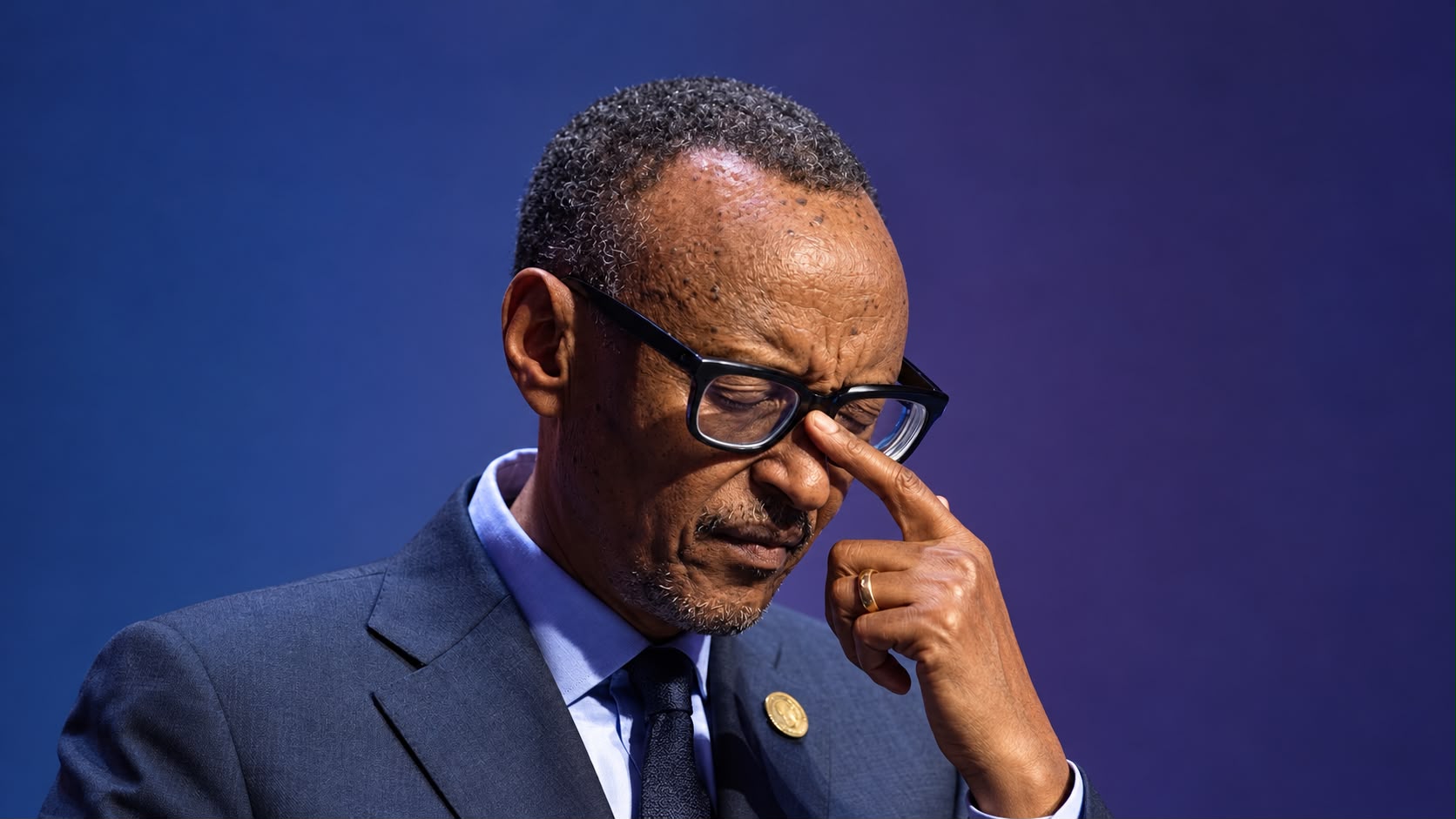
Today the U.S. Department of the Treasury’s Office of Foreign Assets Control (OFAC) sanctioned the Rwandan Ministry of Defence and Zigama Credit and Savings Society. According to OFAC, Zigama is a key Rwandan financial institution that has played a central role in facilitating Rwanda’s support for the March 23 Movement (M23) and its political wing, the Congo River Alliance.
This is not a warning shot. It is a direct institutional strike.
U.S. Secretary of the Treasury Scott Bessent left no room for interpretation:
“Today, the United States makes good on President Trump’s promise to hold Rwanda accountable for its commitments under the Washington Accords for Peace and Prosperity. Rwanda must halt its support for M23 and withdraw its troops from eastern DRC.”
The message is blunt. Stop the support. Pull the troops out. Now.
This is not the first round. The United States previously sanctioned the Rwanda Defence Force, Kagame’s advisor James Kabarebe, several senior military commanders, the Rwanda Minerals Board, and multiple companies tied to the mining sector. Each time, Kigali denied, deflected, and continued. Each time, the evidence of Rwandan troops, weapons, logistics, training, and financial pipelines grew harder to dismiss.
Now the Ministry of Defence itself is on the list. So is the financial institution that moves money for weapons purchases from China and other countries, funds RDF travel and training, handles tens of millions of dollars in transactions for M23 and the Congo River Alliance, and has facilitated the movement of gold from M23-controlled mines into Kigali.
These are not peripheral actors. They sit at the center of the state machinery that has enabled the war economy in eastern Congo. The Ministry of Defence directs the deployment of thousands of Rwandan troops who fight alongside M23, supply it with equipment, and help it hold territory. Zigama keeps the financial channels open.
The Washington Accords, signed in December 2025 under U.S. mediation, were supposed to end this. Rwanda signed them. Kagame stood there and committed to peace and regional economic cooperation. Then the same pattern continued: troops across the border, advanced equipment on the battlefield, key towns and mining zones under M23 control, civilians displaced, and minerals extracted under force.
The old excuses — that Rwanda is only acting defensively against the FDLR, that M23 is a purely Congolese force, that any presence is limited and temporary — no longer hold. The scale of the military involvement, the financial facilitation, and the territorial gains tell a different story. The United States is no longer treating the denials as credible.
Kagame has no room to hide. Sanctions on the Ministry of Defence and Zigama strike at the institutional core of the policy. They freeze assets, cut off U.S. dealings, and raise the cost for anyone still willing to do business with these entities. They also signal that the previous rounds of pressure were not the end of the process.
Washington’s demand is now explicit and backed by concrete measures: halt support for M23 and withdraw Rwandan troops from eastern DRC. The Ministry of Defence and Zigama are under sanctions. The question is no longer whether the evidence exists. It is whether Kigali will finally treat its commitments as binding, or whether it will test how much further the next measures will go.
Discussion
No comments yet. Be the first to comment.