


Kagame’s Billion-Dollar Whitewashing Machine, Zigama CSS, Takes Direct Hit from US Sanctions
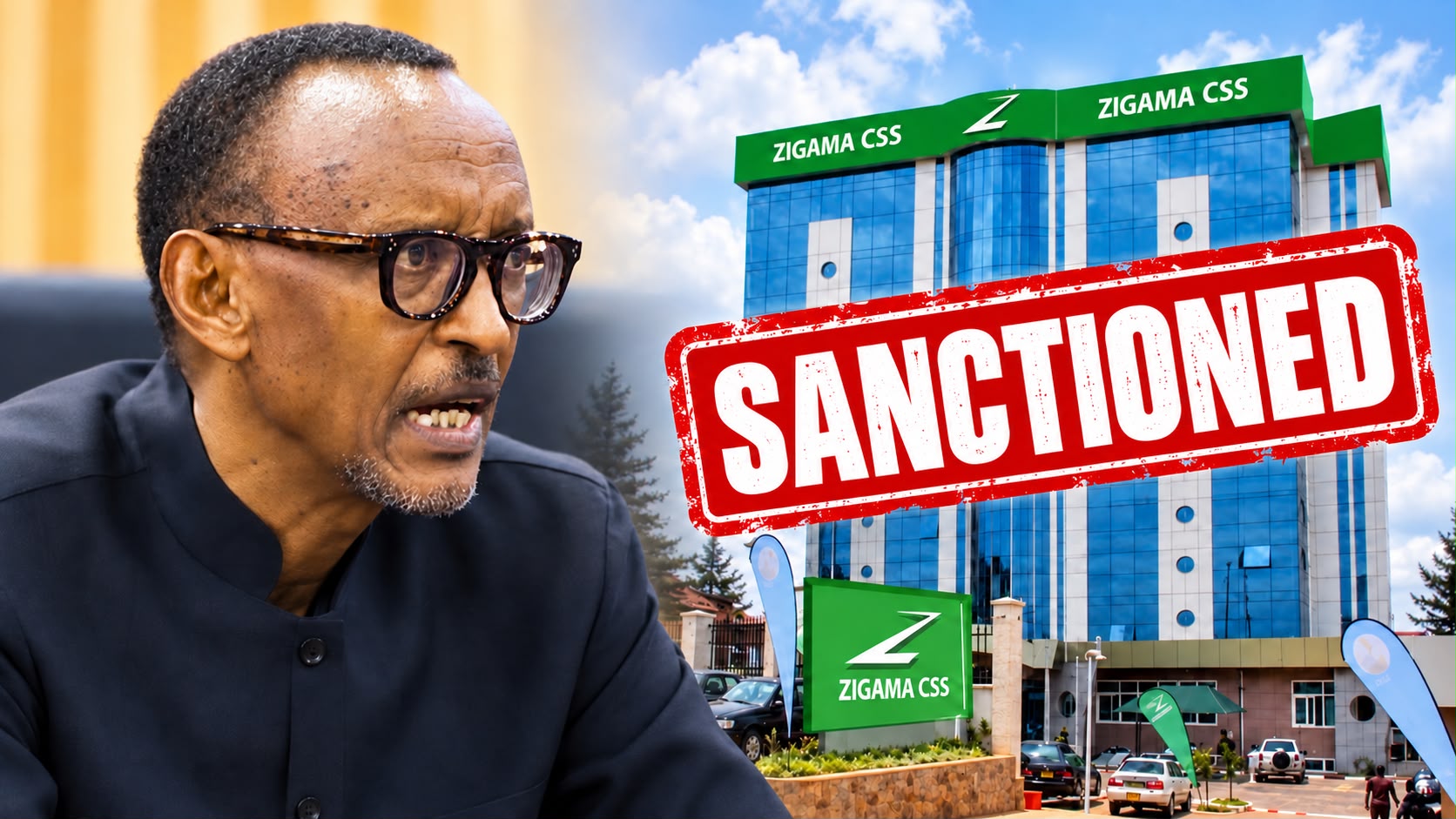
The United States government has finally severed the financial arteries of Paul Kagame’s regional destabilization network. By slapping crippling sanctions on Rwanda’s Ministry of Defence and its captive financial engine, the Zigama Credit and Savings Society (Zigama CSS), Washington has exposed a dark truth: under the guise of a soldier's co-op sits a sprawling, opaque washing machine for conflict minerals and illicit arms.
Like every other tentacle of the Rwandan totalitarian state, the ruling party, and the military elite, Zigama operates completely in the shadows. It pointedly refuses to publish detailed annual reports on its website. Real transparency is non-existent. What little we know is scraped from tightly controlled propaganda press releases issued after military general assemblies. Yet, even through this curtain of secrecy, the sheer, predatory scale of the institution is undeniable.
Founded in 1997, Zigama CSS is less of a legitimate member-owned cooperative and more of an economic trap for Rwanda's security apparatus. It aggressively locks in over 100,000 captive personnel from the military and police forces across 20 domestic branches. The core mechanism is a system of mandatory extortion: a fixed percentage of every soldier’s meager salary or allowance is automatically deducted at the source. This compulsory siphoning feeds a massive capital pool, ensuring that the foot soldiers funding Kagame’s regional ambitions are financially dependent on the state's central military bank.
By Rwandan standards, this racket is wildly lucrative. In 2020, Zigama boasted a capital base of over RWF 300 billion (around $203 million at the time), openly plotting to cross the $1 billion threshold. The numbers have only grown more aggressive. At its December 2025 general assembly, Zigama bragged of a net profit of RWF 39.3 billion ($26.8 million), setting its sights on an even bloody RWF 42.2 billion ($28.5 million) for 2026.
But Zigama’s most shameful revenue stream comes from a sinister manipulation of the United Nations.
As of 2025, Rwanda shamelessly positioned itself as the second-largest contributor to UN peacekeeping forces, deploying 5,880 uniformed personnel across the globe. Under standard UN frameworks, the international body pays a baseline of $1,474.68 per soldier, per month, directly to the contributing government. In 2025 alone, this translation of human capital into raw cash netted Kagame’s regime a staggering $104.1 million.
Additionally, the European Union allocated €20 million or $21.5 million to fund Rwandan military operations in the Cabo Delgado province of Mozambique through the European Peace Facility.
This international cash injection goes straight into the coffers of Zigama CSS. Rather than passing these premium UN dollars down to the peacekeepers risking their lives, the regime pockets the vast majority. According to the Rwanda 2025 Statistical Yearbook, the average monthly salary for paid employment in Rwanda is a pathetic RWF 73,948—a measly $50.44. The regime keeps the massive, gaping spread between the UN's $1,474 payment and the crumbs it throws to its domestic workforce, using the UN as a front to heavily capitalize its military bank.
To put Zigama’s sheer weight into perspective, the country’s largest publicly traded bank, BK Group PLC (Bank of Kigali), commands total assets of roughly $476 million. Zigama’s untaxed capital, soaring profit margins, and a hostage customer base of 100,000 security personnel make it an unchallenged financial colossus—operating completely off the books.
Now, the mask has been violently ripped off. The US Treasury’s Office of Foreign Assets Control (OFAC) has explicitly linked Zigama CSS to bloodshed, resource plunder, and the violent destabilization of the eastern Democratic Republic of Congo.
According to the October 2026 sanctions dynamic, Zigama is not a bank; it is a weapons procurement pipeline. The US government confirmed that Zigama directly facilitated payments for weapons, heavy ammunition, and military hardware for the Rwanda Defence Force (RDF). Far worse, the Treasury alleged that a dedicated Zigama branch actively laundered conflict gold plundered from M23-controlled territories in the DRC, trafficking the illicit wealth directly into Kigali. The institution has handled tens of millions of dollars in blood money tied directly to the M23 terrorist group and its political arm, the Congo River Alliance.
This systematic rape of the Congo's natural resources is not a new anomaly; it is a decades-long state strategy. Since Rwanda first sent troops across the border in 1996, the regime has treated the DRC as an open-air vault for mineral extraction. Washington’s severe designation leaves no room for ambiguity: Zigama CSS is officially recognized as an illicit financial channel bankrolling regional warfare through blood diamonds, conflict gold, and proxy militias.
By striking Zigama, the United States has hit Kagame exactly where it hurts: his wallet. The myth of Rwanda as a clean, disciplined economic miracle is dead. In its place stands the reality of a rogue financial cooperative functioning as the primary pipeline for regional terror.
Implications of the Sanctions: Trashed Liquidity and Global Isolation
The immediate implication of these sanctions is a devastating chokehold on Rwanda’s elite military pipeline: Zigama CSS will now find it virtually impossible to whitewash its dirty money within the global financial system and international markets.
By landing directly on the US Treasury’s OFAC blacklist, Zigama has effectively been severed from the SWIFT international banking network and the US dollar clearing system. Mainstream credit card giants like Visa and Mastercard will likely revoke their ties to avoid the radioactive taint of US non-compliance. Global financial institutions—terrified of crippling secondary sanctions and total reputational ruin—will treat Zigama as an absolute pariah.
Any attempt to move plundered Congolese gold profits or pocketed UN peacekeeping funds through mainstream European, American, or international markets will be instantly flagged, frozen, and blocked.
Crucially, this isolates the military bank from the oxygen of international investment. Normal commercial banks survive by investing client deposits into international bonds and global stock markets to yield robust returns. With these sanctions, Zigama CSS is entirely boxed out. It is now legally constrained to reinvest its capital strictly within the shallow, low-return Rwandan domestic market—a move that fundamentally cripples its long-term financial prospects and stability.
While the Kagame regime will frantically hunt for workarounds—scrambling to route funds through unsanctioned local proxy banks, forcing its captive members into high-risk domestic franc transactions, or begging for alternative currency clearing lines in places like China—the core damage is irreversible. Forced out of the legitimate global financial architecture, Kagame’s primary economic engine is now reduced to a toxic, isolated vault. The regime's multi-year, trillion-franc ambition has collided head-on with systemic global isolation.
Discussion
No comments yet. Be the first to comment.