


The American Fixer In Rwanda — Meet Mauro de Lorenzo, the Sycophant Who Runs Kagame’s Deep State Side-by-Side With His Daughter, Ange Kagame
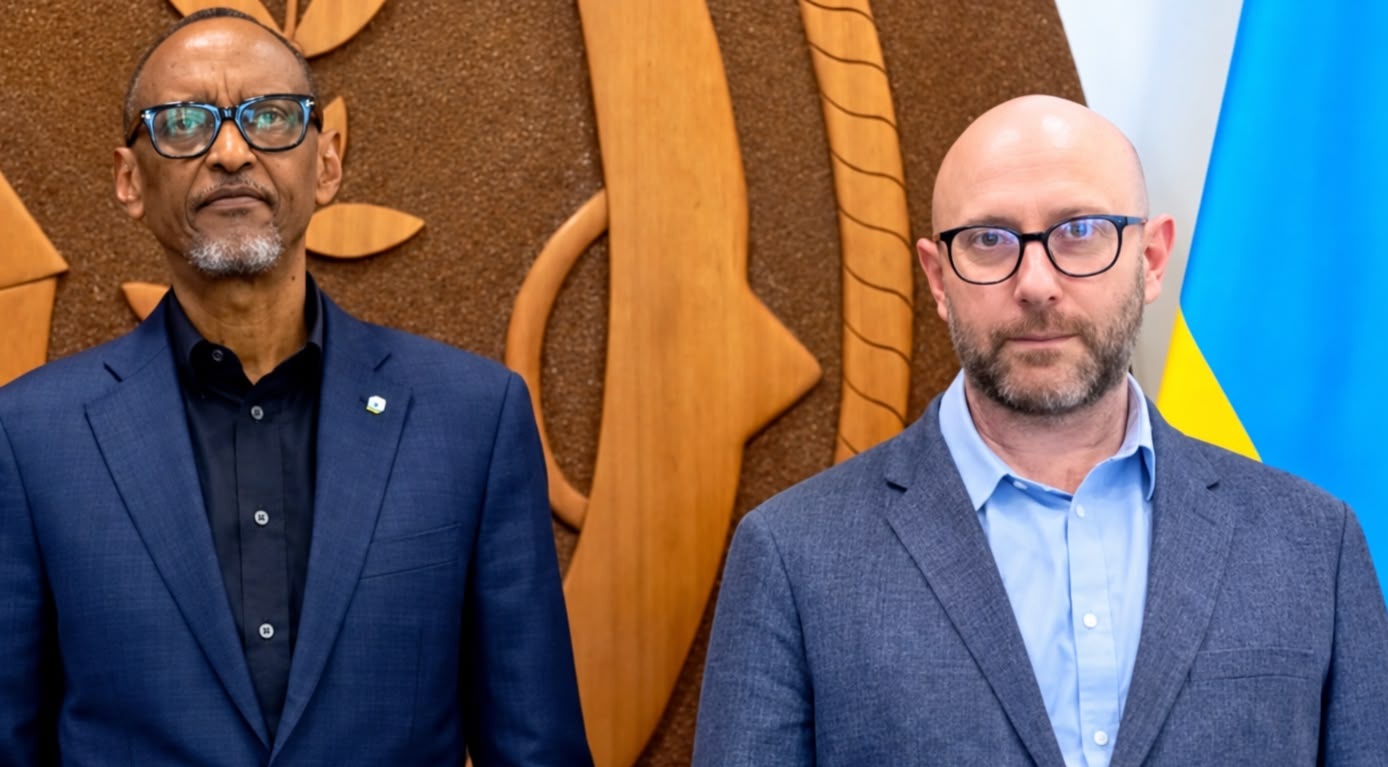
The Kagame regime in Rwanda is operating under a bizarre and deeply hypocritical power dynamic: while the United States systematically dismantles Kigali’s financial and military lifelines with crushing sanctions, the strategic nerve center of the Rwandan presidency is run by a naturalized American insider named Mauro de Lorenzo.
Sitting at the absolute epicenter of totalitarian control, De Lorenzo serves as the Executive Director of the Strategy and Policy Council (SPC) directly inside the Office of the President. In a twist that exposes the paranoid, insular nature of the regime, he is flanked by Paul Kagame’s own daughter, Ange Kagame, who operates right alongside him as the Council’s Deputy Executive Director.
The Washington Blueprint: Who is Mauro de Lorenzo?
Before he became the intellectual architect of Kagame’s police state, Mauro de Lorenzo was a golden child of the Western elite and conservative establishment. This is not an accidental operative; he is a highly polished DC beltway insider who spent decades mastering how Western governments, think tanks, and financial aid systems operate.
After studying at the University of Delaware and attending the University of Oxford as a Rhodes Scholar, De Lorenzo embedded himself in the core of American political strategy. Between 1998 and 2004, he worked as an Africa researcher on the ground in the Great Lakes region, studying the very vulnerabilities he would later help Kagame exploit.
By the mid-2000s, he was a Resident Fellow at the American Enterprise Institute (AEI) in Washington D.C., focusing on U.S. foreign policy, African security, and foreign aid design. He wielded significant backroom influence, serving from 2007 to 2010 as a pro bono deputy to former U.S. Senate Majority Leader Bill Frist on the board of directors for the Millennium Challenge Corporation—a U.S. government foreign assistance agency. He later transitioned
into a Vice President role at the John Templeton Foundation and a senior scholar position at New York University’s Stern School of Business.
De Lorenzo didn't just study authoritarian survival from afar; he mastered the precise mechanisms the West uses to pressure developing nations. In 2013, he took that blueprint and sold it to Kigali, joining the Office of the President. Recognizing that a foreign passport limits absolute power in a dictatorship, he legally renounced his exclusive foreign allegiances to take Rwandan nationality—fully cementing his transition from a Washington intellectual to Kagame's ultimate white-collar mercenary.
The Rusesabagina Affair: From Media Executioner to White House Fixer
There is no greater evidence of De Lorenzo's dark utility to the regime than the high-stakes international crisis surrounding Paul Rusesabagina, the real-life hero of the Oscar-nominated film Hotel Rwanda.
When the Kagame regime lawlessly abducted Rusesabagina via a tricked charter flight to Kigali in August 2020, it triggered a catastrophic diplomatic firestorm. The United States government, Hollywood celebrities, and international human rights bodies aggressively targeted the regime, with the U.S. State Department formally declaring Rusesabagina "unlawfully detained".
De Lorenzo’s role in this saga highlights his calculated malice. Initially, he was Kagame’s media executioner. Taking to public platforms, De Lorenzo led an aggressive public relations crusade to demonize the aging human rights icon, publicly tweeting to moviegoers that Rusesabagina was a terrorist commander.
But when Washington pushed back by withholding over $90 million in foreign aid and threatening deeper economic strangulation, Kagame’s bravado cracked. The dictator didn't send a seasoned Rwandan diplomat to de-escalate the situation; he deployed his naturalized American fixer.
In November 2022, when the White House took over secret negotiations, it was Mauro de Lorenzo who led the Rwandan delegation. The supreme irony was historical: an American-born strategist sat across the table from U.S. National Security Advisor Jake Sullivan to dictate the terms of a dictatorship. De Lorenzo managed the face-to-face chess match, leveraging Rusesabagina’s failing health to extract concessions from Washington, including forcing Rusesabagina’s family to drop a $400 million lawsuit against Kagame and demanding a U.S. statement condemning political violence. It was De Lorenzo who physically delivered Kagame's demands to Sullivan's office, showing that when the regime's survival is on the line, an American opportunist holds the pen.
Ange Kagame: The Dynastic Anchor of the Deep State
Ange Kagame is far more than a ceremonial figure or a First Daughter playing at politics. Her position within the Strategy and Policy Council marks a calculated move toward dynastic fortification. Armed with degrees in political science and international affairs from elite American institutions—including Columbia University's SIPA—she spent four years quietly learning the internal machinery of state repression as a Senior Policy Analyst before being elevated to the Council's second-in-command.
Her presence serves a dual purpose for a paranoid dictator who trusts no one. While her Western education allows her to interpret and sanitize state maneuvers for an international audience, her true value is absolute, unyielding familial loyalty.
Ange Kagame acts as the political anchor to De Lorenzo’s strategy. She ensures that every piece of policy, every backdoor diplomatic maneuver, and every long-term survival plan crafted by the American advisor serves one ultimate goal: the preservation of the Kagame family dynasty. Her rise coincides with her brothers being strategically placed within the state apparatus—one on the board of the Rwanda Development Board and another embedded directly into the elite presidential guard. Together, they form an inescapable hereditary shield around an aging autocrat.
The Parallel of the White Rats: Bob Astles vs. Mauro de Lorenzo
To understand Mauro de Lorenzo, one must look back to the brutal history of East African dictatorships. De Lorenzo is following a psychological and political path identical to Bob
Astles, the notorious British opportunist who became the primary enabler for Ugandan dictator Idi Amin Dada in the 1970s.
Both men represent the ultimate form of mercenary intellect. In the 1970s, Bob Astles recognized that Idi Amin’s deep paranoia and isolation from his own military left a vacuum of power at the top. Astles filled it, discarding his British ties to take Ugandan citizenship, becoming Amin's closest confidant, the head of his brutal anti-corruption squad, and a key architect in the machinery that terrorized the nation. He was dubbed Amin's "White Rat" because he was the only outsider who could handle the dictator's volatile nature, insulate him from reality, and manage his foreign image.
Decades later, Mauro de Lorenzo is playing the exact same high-stakes gamble. Like Astles, De Lorenzo is an educated Westerner who willingly surrendered his democratic roots to serve a tyrant. Where Astles used brute force and local state security to protect his dictator, De Lorenzo uses sophisticated geopolitical maneuvering. He is Kagame’s modern, polished version of the "White Rat". Both Astles and De Lorenzo operate on the same dark logic: they provide the specialized, foreign-facing defense mechanism that a localized dictatorship desperately needs to survive international isolation.
The Hypocrisy of the Choking Sanctions
There is a staggering irony at play. While Kagame routinely stands before regional crowds delivering fiery, anti-Western speeches and railing against foreign interference, his most sensitive state machinery relies entirely on an American actor to do the regime's heavy lifting.
This absolute reliance comes at a time when U.S.-Rwanda relations have suffered a fatal, historic rupture. The U.S. Department of State has unleashed a barrage of targeted sanctions against Kagame's inner circle for fueling violence and mass displacement in the eastern Democratic Republic of Congo. These sanctions have directly targeted the Rwanda Defence Force (RDF) and its highest-ranking generals, while the U.S. Department of the Treasury has frozen the assets of Kigali's lucrative gold smuggling networks.
The Fracturing Shield
Dictators outsource their survival strategies because they fear internal betrayal above all else. By pairing an elite American mercenary with his own daughter at the head of the Strategy and Policy Council, Paul Kagame thinks he has built a flawless system. De Lorenzo provides the tactical maneuvers to circumvent Washington's pressure, while Ange Kagame guarantees that the keys to the kingdom never leave the family bloodline.
But history is unkind to foreign enablers and dynastic fortresses. When Idi Amin's regime collapsed, Bob Astles found himself abandoned, fleeing to Kenya before being thrown into a Ugandan prison for years. Mercenary loyalty and family lineage are rarely enough to save a regime when the economic and military foundations begin to rot from international sanctions. The alliance between Kagame, his daughter, and Mauro de Lorenzo is not a fortress—it is the desperate blueprint of a fracturing dictatorship

No comments yet. Be the first to comment.