


The Global Pantheon of Terror: Why Kagame Outplays the World’s Deadliest Tyrants
When compiling the ultimate ledger of historical horror, historians traditionally look to a specific pantheon of brutality. They look to the industrial slaughterhouses of Europe, the fanatical purges of Southeast Asia, and the bloody post-colonial history of the African continent. They point to Adolf Hitler, Pol Pot, Muammar Gaddafi, and the notorious lineup of African despots: Omar al-Bashir (Sudan), Mengistu Haile Mariam (Ethiopia), Idi Amin (Uganda), Mobutu Sese Seko (Zaire/DRC), and Hissène Habré (Chad).
Yet, if you judge totalitarian supremacy not by the blunt theatricality of its violence, but by the sheer volume of its destruction combined with political longevity, a modern ruler has accomplished what none of these monsters ever could.
Paul Kagame didn't just inherit the structural chaos of history's past dictators; he scaled it to rival global tyrants—all while getting the West to foot the bill.
To see how Kagame outmaneuvers this global and regional lineup, we must contrast his sophisticated engineering of mass mortality against the loud, reckless slaughter of history's classic tyrants.
The Contrast of Terror: Global Systems vs. Regional Despots
Historically, tyrants are categorized by the directness of their carnage and the visible decay of their states.
The Industrialists and Fanatics (Global)
Adolf Hitler (Germany): Orchestrated an industrialized, bureaucratic genocide that murdered 6 million Jews and millions of others through an explicit network of factory-like death camps.
Pol Pot (Cambodia): Executed, starved, and worked to death 1.7 to 2 million people (a quarter of his nation) in the infamous Killing Fields to achieve an overnight agrarian utopia.
Muammar Gaddafi (Libya): Operated a highly erratic petro-dictatorship, liquidating political opponents in Abu Salim prison and funding global terrorism while running his nation's institutions into the ground.
The Post-Colonial Cleansers (Africa)
Omar al-Bashir (Sudan): Orchestrated scorched-earth civil wars and targeted ethnic cleansing via state-sponsored Janjaweed militias in Darfur, leaving over 300,000 dead and millions displaced. He became the first sitting head of state indicted by the ICC for genocide.
Mengistu Haile Mariam (Ethiopia): Executed up to 500,000 people during the "Red Terror" political purges and weaponized a forced-famine ecosystem that claimed hundreds of thousands more.
Idi Amin (Uganda): Utilized blunt state terror, death squads, and ethnic purges of Acholi and Lango soldiers to murder 100,000 to 500,000 citizens, turning the Nile into a dumping ground for bodies.
Mobutu Sese Seko (Zaire): Pioneered a kleptocratic archetype, bleeding his country dry of billions while violently crushing internal rebellions and letting the nation's infrastructure rot to prevent organized opposition.
Hissène Habré (Chad): Dubbed the "African Pinochet," his secret police orchestrated the torture and murder of an estimated 40,000 political and ethnic dissidents during his decade-long rule.
The Spark and the Structural Destruction: The 6 million Toll
Kagame’s place in this pantheon begins with one of modern history's most fiercely contested mysteries: the April 6, 1994, assassination of Rwandan President Juvénal Habyarimana. While Kagame has steadfastly denied involvement, multiple high-ranking defectors and judicial investigations have alleged that his rebel forces triggered the plane crash to collapse
the Hutu regime—an event that served as the catalyst for the horrific Genocide, claiming up to 1 million lives.
But what followed in the decades after the genocide is where Kagame pioneered a far more devastating, modern form of mass mortality: structural deconstruction.
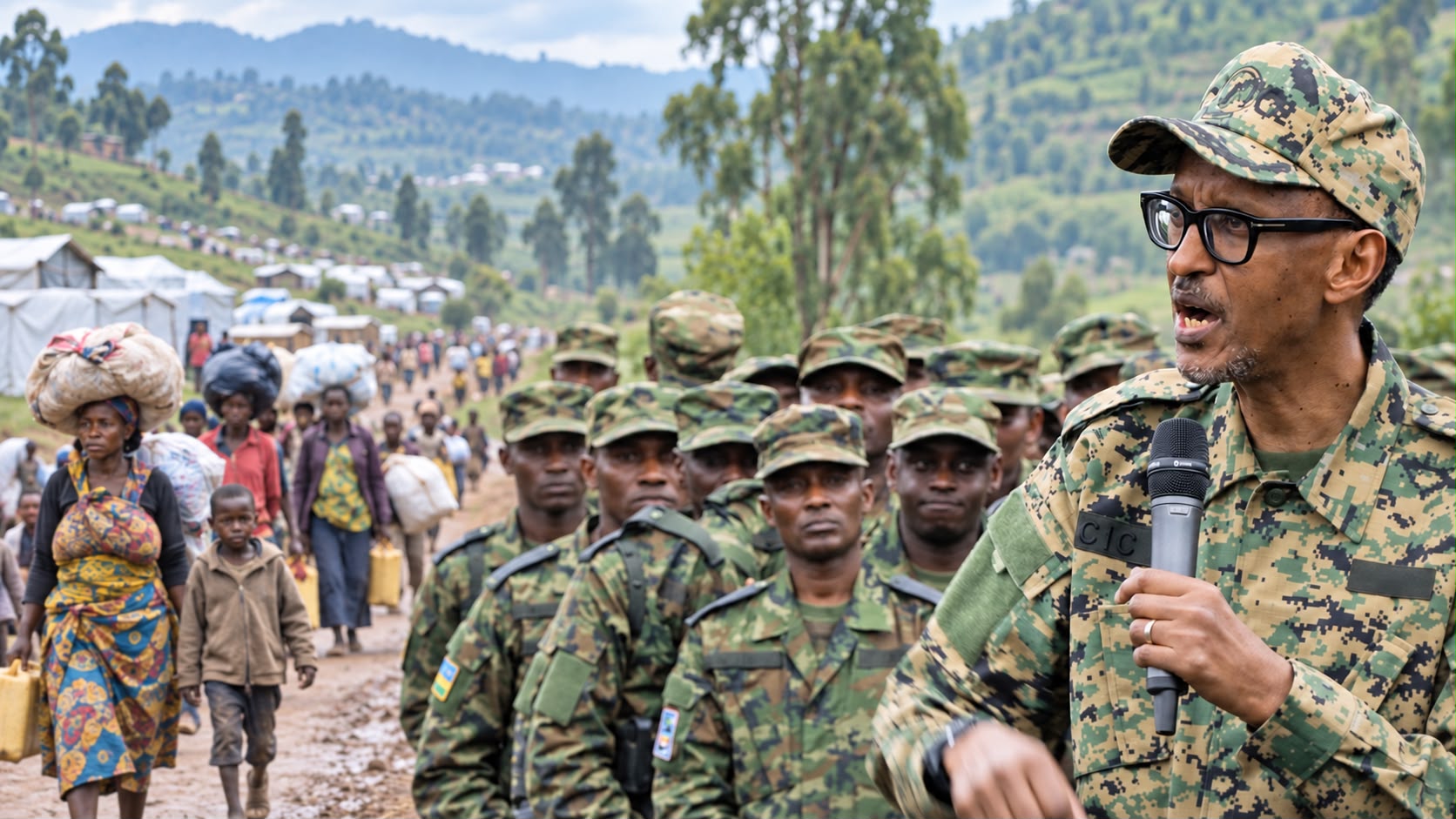
When Kagame’s Rwandan Patriotic Army crossed into Zaire (now the DRC) in 1996, they overthrew Mobutu Sese Seko and lit a geopolitical wildfire. Rather than relying entirely on firing squads or overt proxy militias like Bashir's Janjaweed, Kagame’s multiple invasions systematically shattered the fragile infrastructure of an entire subcontinent.
By destroying medical networks, flattening agricultural stability, and driving millions of fleeing families into deep, malaria-ridden jungles, his geopolitical ambitions engineered a demographic black hole. Demographic and humanitarian studies calculate that the resulting conflicts have caused up to 6 million deaths from 1996 through to the present day.
Idi Amin, Hissène Habré, and Omar al-Bashir killed with torture chambers, direct military executions, and scorched-earth campaigns. Kagame weaponized the complete absence of infrastructure, letting starvation, displacement, and preventable disease do the heavy lifting for him.
The Ultimate PR Masterclass
The defining difference between Paul Kagame and every other dictator on this list is the flawless execution of his political image.
The dictators of the 20th and early 21st centuries were loud, abrasive, and structurally ruinous. Hitler's madness isolated Germany. Pol Pot turned Cambodia into a dark, primitive vacuum. Gaddafi was an eccentric global pariah. Mengistu fled into hiding, Idi Amin died in exile, Mobutu was cast out to die of cancer abroad, Habré was convicted of crimes against humanity, and Bashir was dramatically ousted by his own people and jailed. Their violence consumed them, and their ruined domestic economies exposed them.
Kagame did the exact opposite.
He realized that absolute regional dominance requires absolute compliance from the West.
By maintaining a pristine, tech-forward, corruption-free capital city in Kigali, Kagame transformed Rwanda into a darling of international donors. He hosted global economic forums, put Rwanda’s name on elite European football jerseys, and became a highly praised figure among Western billionaires and politicians. He discovered the ultimate geopolitical cheat code: as long as you keep your domestic streets clean, open up your economy to Western investors, and suppress your domestic political rivals quietly, the international community will look the other way.
The Ongoing Extraction Machine
While Mobutu Sese Seko stole his country’s wealth and stashed it in Swiss banks, he left Zaire entirely broke and non-functional. Kagame’s system, however, turned regional instability into a self-sustaining, highly lucrative business model that remains active.
The permanent destabilization of the eastern DRC isn't just an unintended consequence of his foreign policy; it is an active military capture. United Nations experts and international intelligence tracking have consistently documented that regular Rwandan troops operate on Congolese soil, directly backing, arming, and commanding the brutal M23 proxy militia.
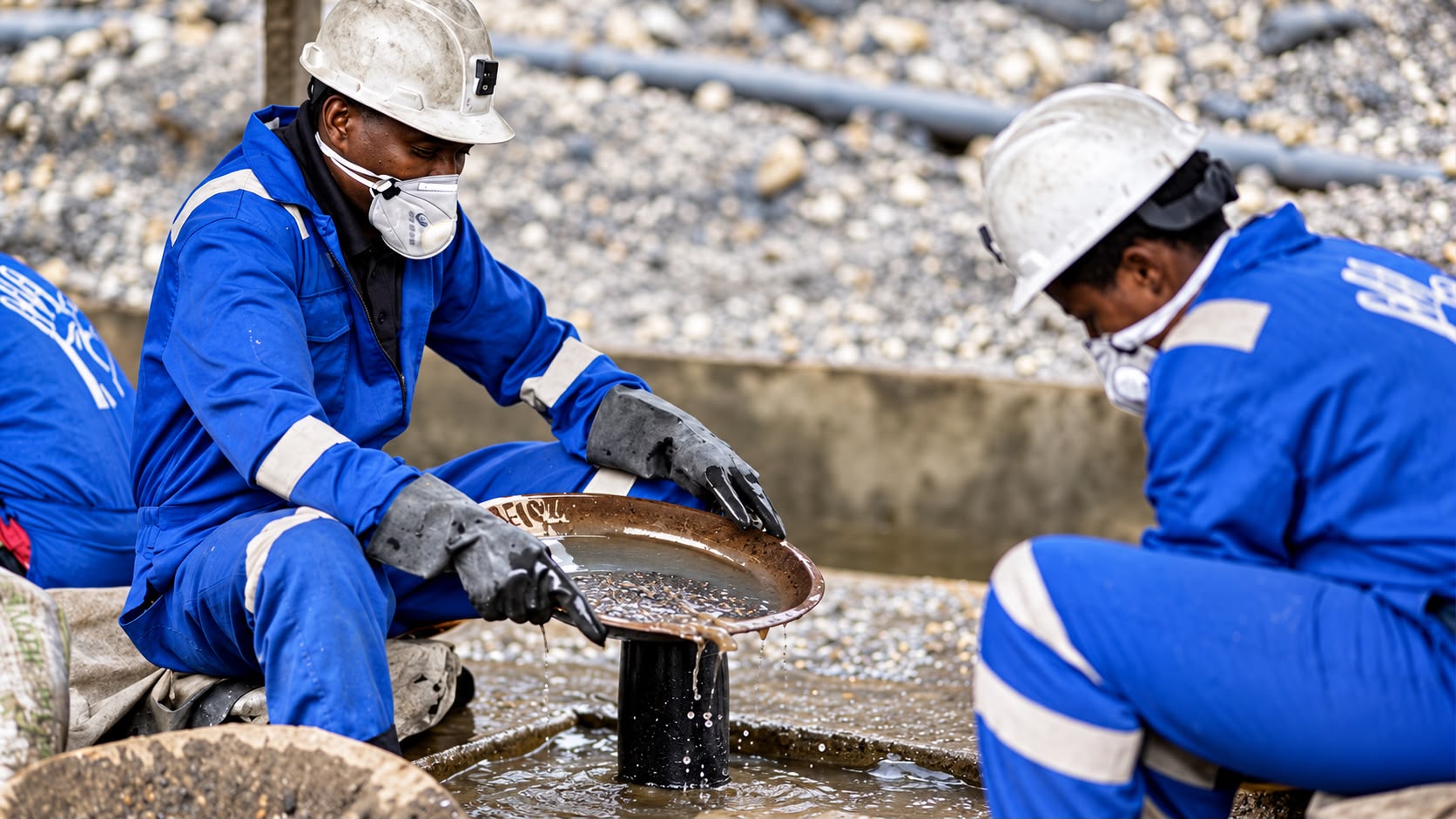
While these forces capture and occupy territory—displacing over 7 million Congolese civilians in a permanent humanitarian emergency—they secure the flow of coltan, gold, and tantalum across the border into Rwanda. From there, they are exported globally to power the Western world's smartphones, laptops, and electric vehicles.
Conclusion: Kagame Is Untouchable and Bolder Than Ever
The historical loop has broken. In 2012, when Paul Kagame’s M23 proxy militia first marched into the critical border city of Goma, a unified front of American and European pressure explicitly cut off foreign aid and forced a swift Rwandan retreat. Back then, the West said "no," and Kagame was forced to listen.
Fast forward to 2026, and Kagame has grown even bolder.
Today, his forces don't just hold Goma; they occupy a vastly expanded swathe of Congolese territory, stretching across both North and South Kivu to swallow entire major metropolises, including Bukavu. The international red lines that held him back in 2012 have dissolved into complete Western paralysis.
Even the aggressive diplomatic theater from Washington has failed to alter the battlefield. The high-profile Washington Accords, engineered to force a synchronized withdrawal of Rwandan troops and freeze support for the M23, collapsed almost immediately. Days after the ink dried, fighting escalated, and Kagame's proxies simply pushed deeper into the Kivu provinces, leaving the diplomatic gesture in tatters.
When the U.S. Treasury took the historic step of placing targeted sanctions on the Rwanda Defense Force (RDF) and senior military officials, followed by economic sanctions targeting an elite Rwandan gold refinery, Kagame openly laughed it off. He publicly hit back at Western sanctions, labeling them "disrespectful" and a distortion of facts, while ensuring his military machinery kept rolling forward without skipping a beat.
The international community is trapped in an architectural loop of its own making. While diplomats engage in toothless peace talks from Geneva to Switzerland, the reality on the ground is absolute.
By weaponizing de facto resource governance over newly conquered provincial capitals, keeping the West addicted to laundered Congolese conflict minerals, and using his army as counter-insurgency leverage for Western allies elsewhere on the continent, Paul Kagame has done what history's loudest tyrants never could. He engineered a multi-million-body-count empire, and he made the world clap for it.
Hitler, Pol Pot, Bashir, Mengistu, and Amin left behind legacies of total collapse and global infamy. Paul Kagame stands alone: entirely secure, globally invited, and utterly untouchable.
Discussion
No comments yet. Be the first to comment.