


The Making of a Tyrant: How Youth Poverty, Abandonment, and the Trauma of Kagame and Putin Forged the Monsters of History
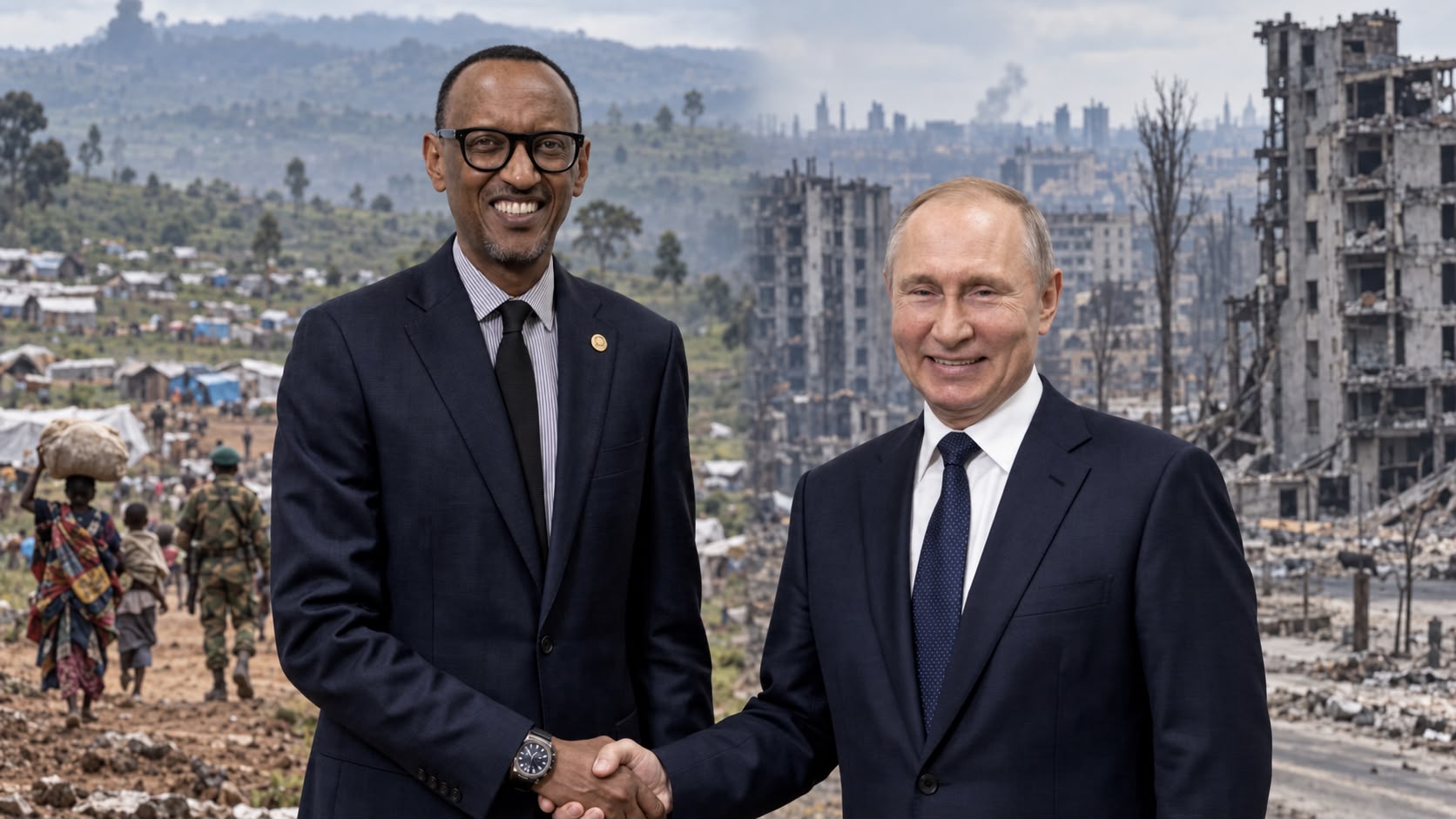
History is haunted by the ghosts of leaders who transitioned from promised saviors to brutal authoritarians. When we look at global figures like Vladimir Putin and Paul Kagame, the common discourse often focuses entirely on their modern geopolitical maneuvers or their iron grip on power. However, to truly understand the rise of such figures—and the devastating toll of their regimes, which have directly or indirectly led to the suffering of millions—we have to look at the psychological and societal breeding grounds that created them: youth poverty, abandonment, and systemic neglect.
The Trauma of Abandonment and Fallen Status
Monsters are rarely born; they are engineered by their environments. Both Putin and Kagame grew up in environments defined by severe instability, displacement, a profound sense of abandonment, and a devastating loss of status.
Vladimir Putin grew up in a communal, rat-infested apartment in post-WWII Leningrad. He was a small child who learned early on that survival meant striking first. He survived the mean, lawless "jungles" of his neighborhood courtyards by associating with street gangs, operating within a brutal subculture where power was the only rule. The collapse of the Soviet Union later cemented a deep sense of geopolitical abandonment, stripping away a grand national identity and replacing it with chaos and deprivation.
Paul Kagame’s early life was shaped by an even sharper fall from the upper echelons of society to the absolute bottom. Before the political upheavals of 1959, his family belonged to the Rwandan aristocracy, enjoying immense social standing. When violence forced them into exile in Uganda, they lost everything. Kagame’s father, a proud man accustomed to aristocratic respect, was shattered by the reality of exile.
Refusing to face the humiliation of a life as a refugee labourer, his father died, leaving the family completely unprotected. Following this loss, the family plummeted into dire poverty, barely having enough food to feed the children. As a displaced youth struggling to survive on the harsh streets of Kampala, Kagame lived as a street boy, navigating underground economies and illegal foreign currency exchanges just to stay alive.
When a youth is abandoned by the world and watches their family starve, a survival mechanism kicks in. Vulnerability is viewed as a death sentence. Trust is eliminated. The child internalizes a permanent lesson: weakness is fatal, and absolute power is the only shield against destruction.
Exploiting the Killing Machines
Out of the desperation of their youth emerged two young opportunists who smelt blood. Rather than being crushed by the violence around them, they chose to master it. Both men recognized that chaos creates a vacuum, and they eagerly joined armed conflicts which they ruthlessly exploited to integrate themselves into state-level killing machines.
Kagame weaponized his exile, joining Yoweri Museveni’s rebel army in Uganda as an intelligence officer, learning the mechanics of guerrilla warfare and internal purges before taking control of the Rwandan Patriotic Front. Putin embedded himself into the dark underbelly of the Soviet security apparatus, leveraging his street-honed survival instincts to climb the ranks of the KGB. He later exploited the brutal chaos of the Chechen wars to solidify his image as a ruthless protector of the state. For both, conflict was not a tragedy to be avoided, but the ultimate ladder to absolute control.
The Elder Statesmen: Mentors and Institutional Anchors
Sergey Lavrov and Tito Rutaremara represent the enduring institutional memory that fortified these trajectories, serving as the father figures who anchored these regimes. Putin’s primary pillar has been his long-serving foreign minister, Sergey Lavrov, since 2004. Kagame’s equivalent is Tito Rutaremara, the old man of the Rwandan Patriotic Front who has been on his side since they entered Rwanda in 1990.
While Lavrov has served as the unyielding face of Russian diplomacy on the global stage, Rutaremara acts as the ideological anchor and "fountain of wisdom" within the Rwandan Patriotic Front (RPF). Both men occupy a rare space in their respective regimes: they are fiercely loyal contemporaries who survived decades of political shifts, acting less like subordinates and more like trusted guardians of the leader's core vision. Their presence provides a veneer of historical continuity and ideological stability to two of the world's most consolidated presidencies.
Beyond mere advisors, Lavrov and Rutaremara function as the ultimate system mentors, actively shaping how their younger leaders exercise and consolidate power.
When Vladimir Putin first assumed the presidency, he was a relatively inexperienced political outsider navigating a volatile post-Soviet landscape. Sergey Lavrov, with his deep institutional knowledge of global diplomacy, effectively mentored Putin in the brutal art of geopolitical chess. Lavrov taught him how to leverage Russia’s veto power, push back against Western hegemony, and project a fiercely nationalistic worldview.
Similarly, Tito Rutaremara served as an indispensable ideological mentor to a young Paul Kagame during the high-stakes transition from guerrilla warfare to state governance. As the intellectual architect of the RPF, Rutaremara grounded Kagame’s raw military discipline in a robust framework of national unity, self-reliance, and disciplined state-building.
In both regimes, these elder statesmen did not just witness the rise of their leaders—they actively educated them on how to construct, wield, and sustain absolute authority.
The Ruthless Ascent to Power
Once embedded within these systems and guided by their mentors, their climb to the peak of national leadership was defined by absolute, calculated coldness. Ascending into power meant eliminating anyone who stood in the way. Trust was treated as a political liability.
Potential rivals, former allies who knew too much, outspoken journalists, and political dissidents were systematically swept aside. Through mysterious assassinations, sudden poisonings, forced exiles, and staged judicial purges, both Kagame and Putin ensured that the path behind them was cleared of any obstacles. By rewriting constitutions and dismantling independent institutions, they transformed their respective states into personal fiefdoms where dissent equals treason.
To preserve these personal fiefdoms, both men engineered unprecedented eras of absolute rule. Putin has maintained an iron grip on the Kremlin for 27 years since first ascending to power in 1999. Kagame has exercised undisputed dominance over Rwanda for 32 years, serving as the nation's de facto ruler since 1994 and officially as president since 2000.
Borderless Vengeance: Hunting Dissidents Worldwide
Perhaps the most chilling similarity between the two regimes is their shared doctrine of borderless vengeance. Neither dictator tolerates dissent, even if an opponent flees across oceans. They relentlessly hunt opposition figures around the globe, projecting state- sponsored terror into sovereign nations far beyond their own borders.
To achieve this, both regimes depend heavily on the predatory use of advanced information technology to spy on and track their victims. Putin’s security services have long weaponized digital surveillance and physical tracking networks to hunt down defectors and activists. Similarly, Kagame’s government has repeatedly deployed sophisticated spyware, like Pegasus, alongside illicit tracking devices to infiltrate the phones and monitor the movements of exiled Rwandan dissidents.
The ultimate goal of this global surveillance is permanent erasure through extrajudicial assassinations.
The world has repeatedly witnessed their willingness to employ the most terrifying methods, including killing with poison abroad. From Putin's radioactive polonium and Novichok nerve agent attacks on European soil, to the suspicious hotel-room strangulations, shootings, and poisonings of Kagame's former allies turned critics in South Africa and across the African continent, both leaders send the same message to the world: no distance can protect you from the state’s wrath.
How Youth Poverty Breeds Nihilism
Mass poverty among the youth acts as a pressure cooker. When young people are deprived of basic dignity, security, and economic mobility, they become highly susceptible to radicalization or hyper-aggression.
In environments of scarcity, the future does not exist; only immediate survival does. For leaders who rise out of these ashes, the poverty of their youth often creates an insatiable hunger for dominance. What begins as a quest for security mutates into an obsession with total subjugation. Anyone who questions the leader is seen as an existential threat to the survival they fought so hard to secure.
The Cost: Millions of Lives
The ultimate tragedy of the traumatized youth is that, once given power, they replicate the exact violence that broke them. They become the ultimate arbiters of the abandonment they once suffered, and the human cost is catastrophic.
We see the terrifying results of this cycle in modern geopolitics, written in staggering death tolls and widespread human devastation. Kagame's aggressive regional ambitions and military campaigns have directly fueled decades of proxy warfare in the Democratic Republic of Congo, where he is estimated to have caused up to five million deaths through systematic violence, forced displacement, and the catastrophic collapse of humanitarian infrastructure. Under his direction, Congolese natural resources are aggressively pillaged while civilian populations are left to perish.
This devastation mirrors perfectly across the globe in Putin's bloody legacy. His rise to power was baptized in the Second Chechen War, where his forces laid waste to Grozny and killed an estimated tens of thousands of civilians. This internal brutality laid the groundwork for his full-scale invasion of Ukraine. Putin’s war of aggression in Ukraine has turned into a meat- grinder of historic proportions, with combined military and civilian casualties climbing past two million personnel. Estimates indicate that Russian forces alone have suffered up to half a million deaths, while hundreds of thousands of Ukrainian soldiers and civilians have been killed or grievously wounded as entire cities are systematically leveled to satisfy a dictator's nostalgia for empire.
From the African Great Lakes to Eastern Europe, the policies and direct military actions of these hyper-authoritarian regimes don't just silence political rivals—they crush entire nations. The ripple effects of unchecked tyranny are measured in mass graves and shattered generations.
The Blindness of Global Diplomacy
The darkest irony of these tragedies is that the international community repeatedly watches the warning signs develop, choosing appeasement, economic opportunism, or deliberate ignorance until the blood toll becomes impossible to deny. For decades, global powers willfully blinded themselves to the domestic crackdowns, the silenced journalists, and the early regional aggressions of both men, transfixed instead by illusions of stability and reform.
In the case of Paul Kagame, the West’s blindness was heavily driven by "genocide guilt." Following the international community's catastrophic failure to intervene during the 1994 Rwandan Genocide, Western nations—particularly the United States and the United Kingdom—transformed Kagame into an untouchable figure. Capitalizing on this moral leverage, Kagame positioned himself as a visionary economic reformer and a reliable peacekeeping partner.
As billions of dollars in foreign aid poured into Kigali, Washington and London routinely looked the other way while Kagame dismantled the free press, assassinated political rivals, and launched devastating proxy incursions into the Democratic Republic of Congo. The West eagerly praised Rwanda’s clean streets and rising GDP, effectively funding the financial and diplomatic shield under which Kagame orchestrated the exploitation and mass death of millions in the DRC.
Vladimir Putin benefited from a different, yet equally cynical, brand of diplomatic blindness: economic codependency and post-Cold War triumphalism. In the early 2000s, Western leaders desperately wanted to believe that Russia was on a permanent path toward capitalism and integration. When Putin launched his scorched-earth campaign in Chechnya, leveling Grozny and slaughtering tens of thousands of civilians, the West largely dismissed it as an internal anti-terror operation.
Europe, particularly Germany, went on to tie its economic future to cheap Russian oil and gas, building the Nord Stream pipelines even after Putin invaded Georgia in 2008 and annexed Crimea in 2014. Business-as-usual and energy dependencies overrode moral obligations. This continuous appeasement sent a clear message to the Kremlin: the West would loudly complain, but it would ultimately choose financial comfort over territorial integrity.
By the time the international community wakes up to the reality of the monsters it helped nurture, the cost is already written in the blood of millions. The tragedies of Ukraine and the Democratic Republic of Congo are not just the calculations of two traumatized, ruthless autocrats. They are the direct consequences of a global diplomatic system that consistently prioritizes short-term geopolitical convenience over human life, proving that when the world coddles tyrants for the sake of stability, it only ensures a far more devastating explosion of violence.
Discussion
No comments yet. Be the first to comment.