


The Sharp-Dressed Aristocrat Refusing to Change Filthy Underwear: Inside Kagame’s Smart City Farce
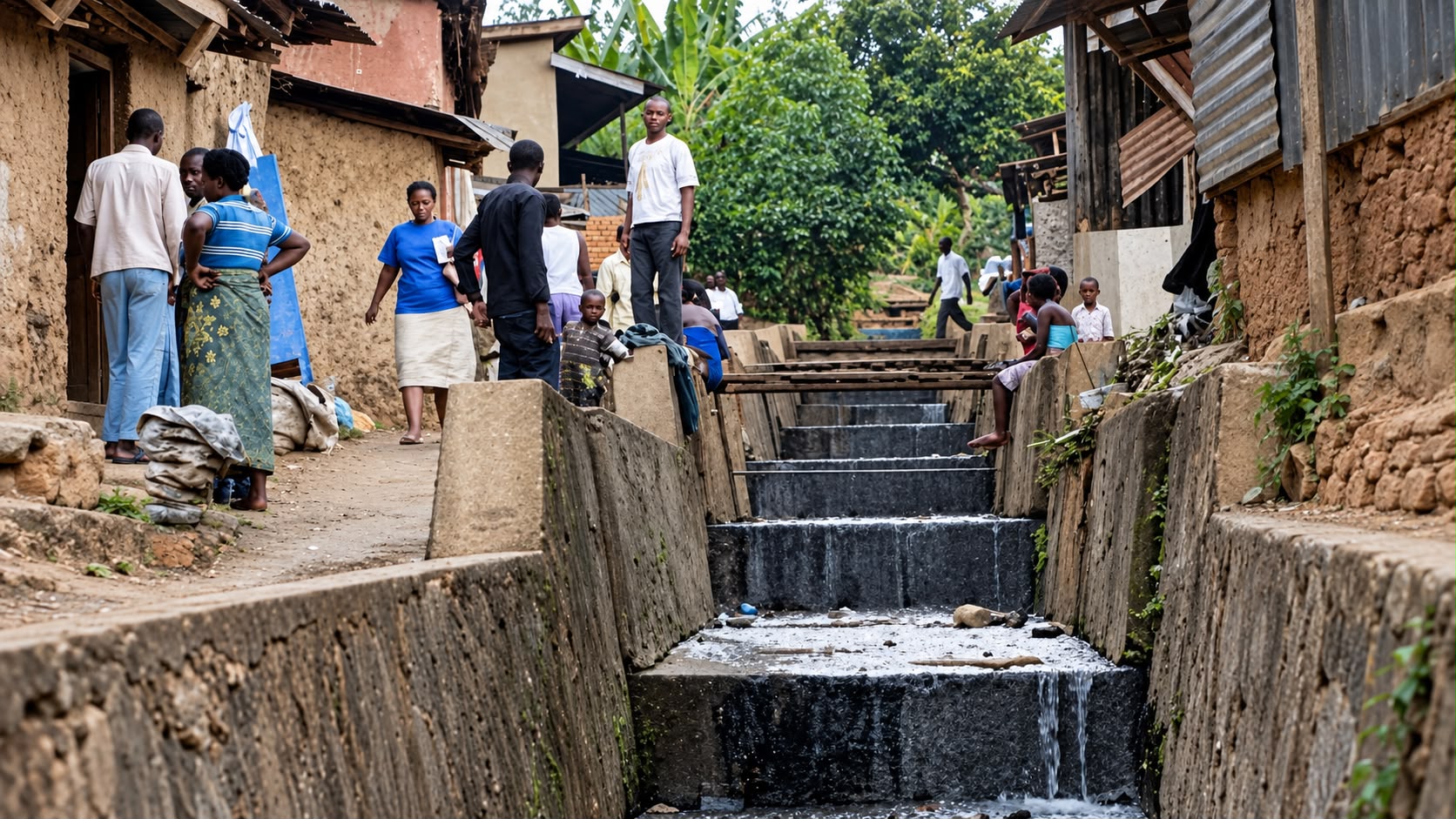
Paul Kagame’s heavily marketed "smart city" is a masterclass in superficiality—resembling a sharp-dressed aristocrat who refuses to change their filthy underwear. Underneath the manicured lawns, spotless asphalt, and high-tech PR campaigns, Kigali has no centralized sewage system for its population of nearly two million people.
Instead of a modern urban infrastructure, the Rwandan capital relies on a subterranean time bomb:
• The Population: Ordinary inhabitants still rely on basic pit latrines.
• The Elite: Luxury hotels, corporate o ice buildings, and government ministries sit directly on top of individual septic tanks.
• The Reality: Raw, untreated sewage routinely overflows and bleeds into the city’s ravines, streams, and regional water systems.
A Ticking Health Time Bomb for Two Million People
This structural failure has created a catastrophic health time bomb, directly contaminating the water supply relied upon by nearly two million citizens. Liquid human waste actively leaches into the local water table, turning the capital's natural waterways into open, flowing sewers.
Every single day, millions of residents are forced to live, work, and commute alongside a brewing epidemiological crisis. The absence of municipal wastewater management means that waterborne pathogens, deadly bacteria, and raw e luent are an unavoidable part of the urban ecosystem. Kagame has engineered an environment where a massive outbreak is not a question of if, but when, as the daily water supply is continuously poisoned from beneath.
A Transnational Ecological Disaster
This is not just a localized health hazard for the residents of Kigali; it is a full-scale continental environmental crisis.
The geography of Kigali’s neglect flows far beyond Rwanda's borders, driven primarily by the River Nyabugogo, which serves as the central artery where most of the city's raw sewage flows:
1. The Poisoned Artery: Local ravines and urban streams dump directly into the River Nyabugogo, turning it into an open-air toxic sludge machine right in the heart of Kigali.
2. River Nyabarongo: The heavily contaminated Nyabugogo empties its toxic load into the Nyabarongo River.
3. Akagera River: The Nyabarongo then feeds into the Akagera River.
4. Lake Victoria & The Nile: The Akagera travels onward to feed Lake Victoria in Uganda, eventually rushing into the River Nile and travelling all the way to Egypt and the Mediterranean coast.
Kagame’s structural negligence means Rwandan e luent is e ectively being outsourced to the rest of East and North Africa.
The Mystery of the Missing Infrastructure
Why a regime so obsessed with being branded as the cleanest destination on the continent stubbornly refuses to build functioning sewage networks and treatment plants remains the geopolitical puzzle of the century.
The contrast between the regime's public image and the subterranean reality is staggering. On the surface, the government enforces strict bans on plastic bags and mandates compulsory community cleanup days for ordinary citizens. Yet, at the municipal level, there is absolutely zero centralized wastewater processing.
The state spends vast sums marketing luxury tourism and hosting glossy international summits, all while keeping millions of its citizens living on top of an active, brewing health hazard. Decades of intensive urban planning and aggressive green branding have produced endless studies upon studies but have yielded zero concrete execution on the ground.
The failure cannot be blamed on a lack of resources. The World Bank, the African Development Bank, and the European Union have all announced funding schemes and financial packages over the years to address this exact crisis. The money is o ered, the blueprints exist, and yet the ground remains undug.
Headlineless Progress and Broken Promises
The Kigali sewage system is back in the news headlines—and it is appearing in no less than the ruling party’s own media outlet, The New Times. For a regime that controls the narrative with an iron fist, watching its own state-aligned press question whether the capital can ever solve its sanitation nightmare is a profound admission of failure.
The state press routinely documents a cyclical farce of failed contracts, abandoned pipeline designs, and moving deadlines. The government announces groundbreaking dates, only to quietly cancel them later when they realize the structural chaos required to fix their own mistakes.
Conclusion: The Grand Illusion of Kagame's Cleanliness
The ultimate mystery lies in the psychological and political disconnect of Rwanda's leadership. Paul Kagame can command global praise for a clean sidewalk, but until he addresses what lies beneath it, Kigali's "smart city" status remains an eco-disaster wrapped in a public relations lie.
It is an active health hazard masquerading as progress. While foreign dignitaries walk immaculate streets, the subterranean reality tells a completely di erent story of neglect. The blueprints have gathered dust for years, the international cash flow has dissolved into administrative black holes, and the underlying crisis continues to flow down the Nile. Go figure.
Discussion
No comments yet. Be the first to comment.