


Kagame’s Thirty-two-Year Dictatorship Is Nothing But a Catastrophe for Rwanda’s 14.9 Million People
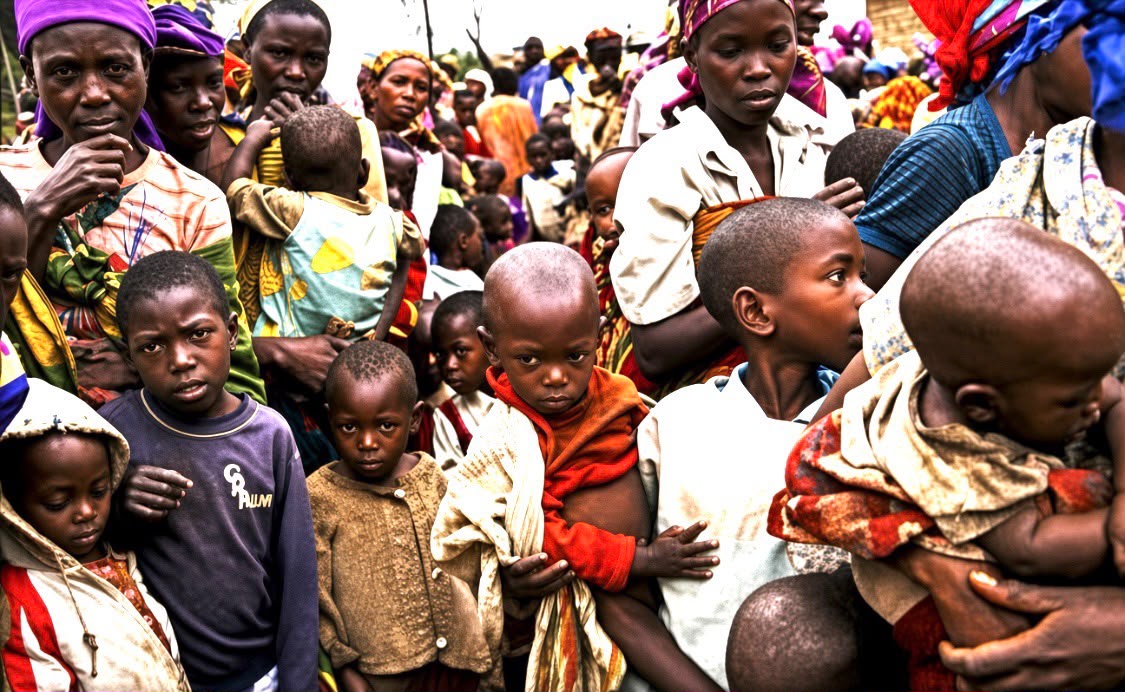
For over three decades, international headlines have often painted Rwanda as a modern economic miracle—a gleaming beacon of African development. But behind the carefully curated public relations campaigns lies a devastating human toll. Data published directly by the Rwandan government itself, through the National Institute of Statistics of Rwanda's 2025 Statistical Yearbook, exposes a bleak and disastrous reality for the country’s 14.9 million citizens.
An Economy Built on Precarity and Poverty Wages
The regime frequently boasts of modernization, yet the vast majority of the Rwandan workforce is trapped in extreme economic vulnerability. According to the government's own metrics, a staggering 91.2% of the labour force relies entirely on temporary, part-time, informal incomes with no benefits of any kind.
For the millions of Rwandans driving the agricultural sector—the backbone of the nation's survival—the financial returns are catastrophic. The average monthly income for paid employment in agriculture stands at a mere RWF 30,678, which translates to a devastating $20.80 USD per month. Surviving on less than a dollar a day is not a temporary setback for these workers; under decades of Kagame's rule, it has become a permanent state of existence.
A Crippled Educational System and Technological Deficit
A country's future relies heavily on its investment in human capital, yet Rwanda's educational indicators reveal a systemic failure to prepare the next generation. Only 15.4% of the current Rwandan labour force has completed secondary school education. The numbers shrink even further at the highest levels of learning, with a microscopic 2.9% of Rwandans attending tertiary education.
This educational deficit directly hinders the nation's ability to compete in a modern, digital global economy. Despite grand speeches about turning Kigali into a tech hub, only 50% of the population is connected to grid electricity—and in the rural areas where the vast majority of Rwandans live, grid electricity is virtually non-existent. Furthermore, a dismal 6.9% of households nationwide own a computer, leaving more than 93% of the population completely disconnected from the digital tools necessary for advancement.
A Healthcare System on the Brink of Collapse
Perhaps the most alarming indictment of the 32-year dictatorship is the state of human survival under its watch. Malnutrition and stunting among Rwandan children have soared past 30%, exposing a severe food security crisis that threatens the physical and cognitive development of the nation's future.
This systemic neglect is compounded by a dangerous shortage of medical professionals available to care for 14.9 million people. The regime's official tallies reveal a healthcare infrastructure that is profoundly understaffed:
• Doctors: 1,447
• Nurses: 8,872
• Dentists: 307
• Pharmacists: 55
With only 1,447 doctors for nearly 15 million citizens, the doctor-to-patient ratio is roughly 1 per 10,000 people—well below global safety standards. The crisis is even more acute in specialized care; having just 55 pharmacists nationwide means millions of people lack basic, reliable access to safely managed essential medicines.
Conclusion
Thirty-two years of absolute control have yielded a society where formal employment is a luxury, higher education is out of reach for 97% of the population, child health is compromised, and basic healthcare is a mathematical impossibility for the average citizen. When a dictatorship's own official data contradicts its propaganda, the illusion of progress shatters. For the 14.9 million people of Rwanda, the current regime has not been a miracle—it has been a catastrophe.


No comments yet. Be the first to comment.