


Kagame’s War on Literacy: How a Dictator’s Language Obsession Destroyed Rwandan Education
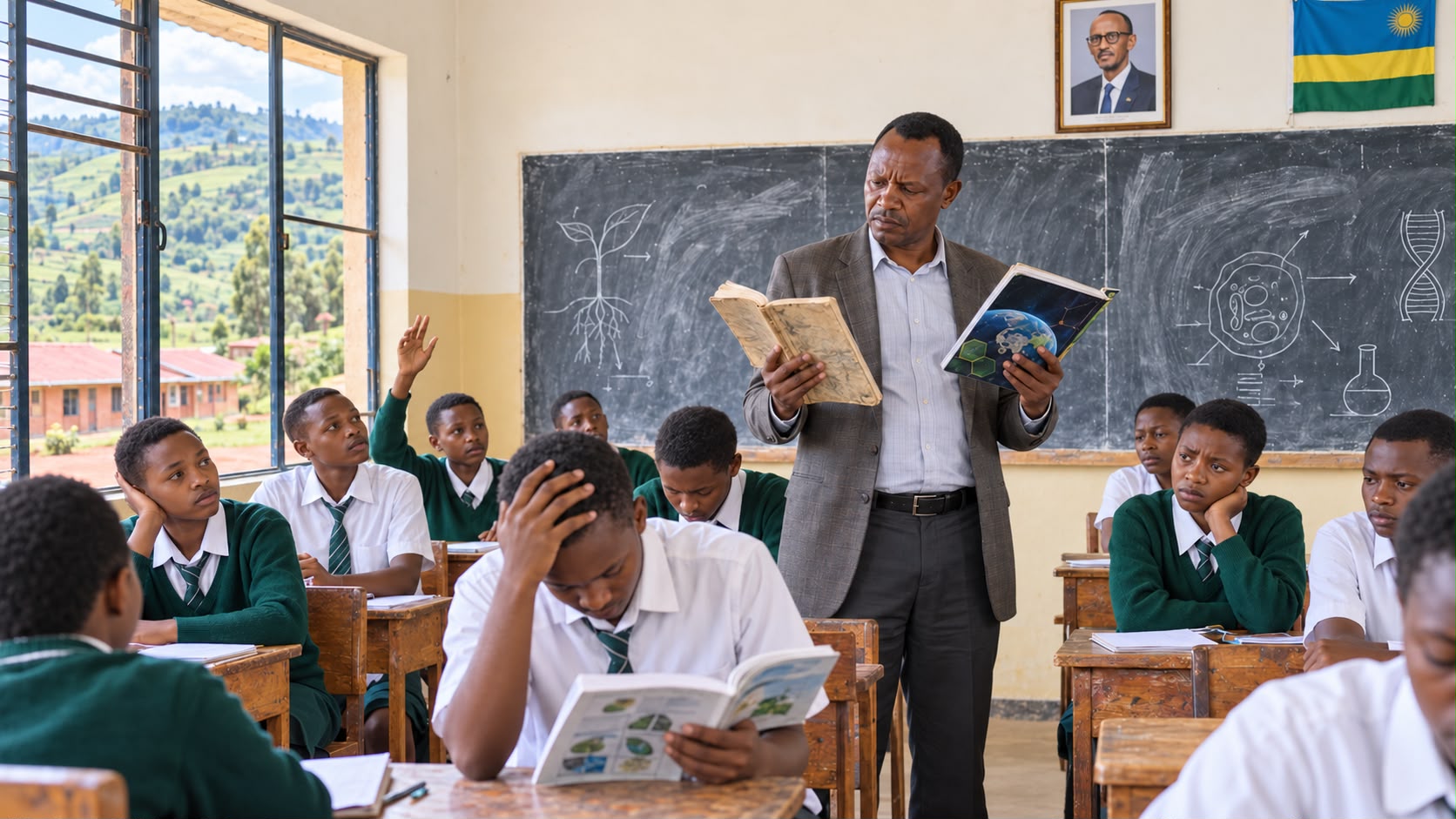
In 2008, President Paul Kagame orchestrated one of the most reckless acts of institutional sabotage in modern educational history: he abolished French as the language of instruction across Rwanda's entire school system overnight.
Driven by an aggressive desire to purge Francophone influence and position Rwanda for entry into the Commonwealth, Kagame used millions of schoolchildren as pawns in a personal geopolitical gamble. While the Western press praised his "forward-thinking" pivot to English, the domestic reality was an unmitigated disaster that broke the spine of Rwanda's educational infrastructure.
The Geopolitical Bargain: Trading Classrooms for a Seat at the Table
The timing of the 2008 educational decree was not an accident; it was a calculated diplomatic theater. For years, the post-genocide Rwandan Patriotic Front (RPF) elite—many of whom grew up as Anglophone refugees in Uganda—sought a hard break from France. Tensions peaked when diplomatic relations between Paris and Kigali were severed completely.
Kagame’s retaliation was to target the French language itself. In late 2008, the regime officially fast-tracked English into schools, intentionally laying the groundwork to clear the strict cultural hurdles for entering the British Commonwealth.
The culmination of this gamble occurred in November 2009, when the Commonwealth of Nations formally admitted Rwanda as its 54th member state during a summit in Trinidad and Tobago. To secure this political trophy, Kagame overrode decades of history: Rwanda became only the second nation in the bloc's history to join without ever having a past colonial tie to the British Empire. The global photo-op was a massive success for Kagame’s image, but the price of admission was billed entirely to Rwanda’s youth, who were left trapped in a broke, rewritten school system.
The Blind Switch: An English System Without English Teachers
Rwanda is historically and structurally a Kinyarwanda- and French-speaking nation. When Kagame decreed that English would instantly become the sole medium of instruction, he did so with absolute indifference to a glaring reality: Rwanda had almost no fluent English teachers.
Teachers who had spent decades mastering pedagogy in French were suddenly ordered to teach complex mathematics, chemistry, and history in a language they could barely speak. The classroom transformed from a space of learning into a theater of mutual incomprehension. Data from the years following the rollout painted a horrific picture of this negligence, revealing that only 4% of existing primary school teachers possessed professional-level English proficiency. The regime forced a nation of educators to become functionally illiterate overnight.
Heartbreaking Accounts from the Classroom
The human cost of this top-down decree fell squarely on local educators, who faced intense humiliation, stress, and the constant threat of termination if they failed to adapt to an impossible demand.
• “We went from being respected, articulate professionals to feeling entirely illiterate in front of our own pupils,” recalls Jean-Bosco, a veteran science teacher from the Southern Province. “I had spent 15 years teaching biology in French. Overnight, I was handed an English textbook. I spent my nights memorizing vocabulary fragments just to survive the next day's lesson. The children knew I didn't understand the words, and I knew they didn't either. It wasn't education; it was a farce.”
• Another primary school teacher from a rural district near Bugesera described the psychological terror of the transition: “The government threw us into brief, chaotic crash courses during school breaks. They expected us to master an entirely new tongue in weeks. When we struggled, the threat was clear: adapt or lose your livelihood. But you cannot instantly code-switch pedagogical expertise into a mind that is panicked and scrambling just to translate basic nouns.”
The Importation Carousel
Realizing the domestic school system was completely paralyzed, Kagame resorted to desperate, short-term border stopgaps rather than building sustainable local infrastructure:
Uganda: First, the government imported thousands of English-speaking teachers from Uganda.
Kenya: When regional friction and demand outpaced supply, recruitment shifted to Kenya.
The Funding Crash: Predictably, the money ran out. Budgetary constraints forced the regime to halt the importations, leaving local schools stranded mid-transition without support.
Zimbabwe: Years later, facing a permanently crippled system, the administration scrambled once again, striking a deal with Zimbabwe to import a fresh cohort of educators to patch the bleeding.
This chaotic, expensive carousel of hiring and discarding foreign teachers proved that the regime never possessed a coherent, long-term plan for the children of Rwanda.
The Economic Fallout: A Fractured, Two-Tiered Job Market
While Kagame championed the policy as a vital step to integrate Rwanda into globalized markets and the East African Community (EAC), labor economic data reveals a devastating structural failure.
Instead of creating a competitive national workforce, the language experiment aggressively widened the class divide. The abrupt shift created an elite wage premium that exclusively benefited the top two earning deciles—predominantly wealthy, urban families who could afford elite private international schooling.
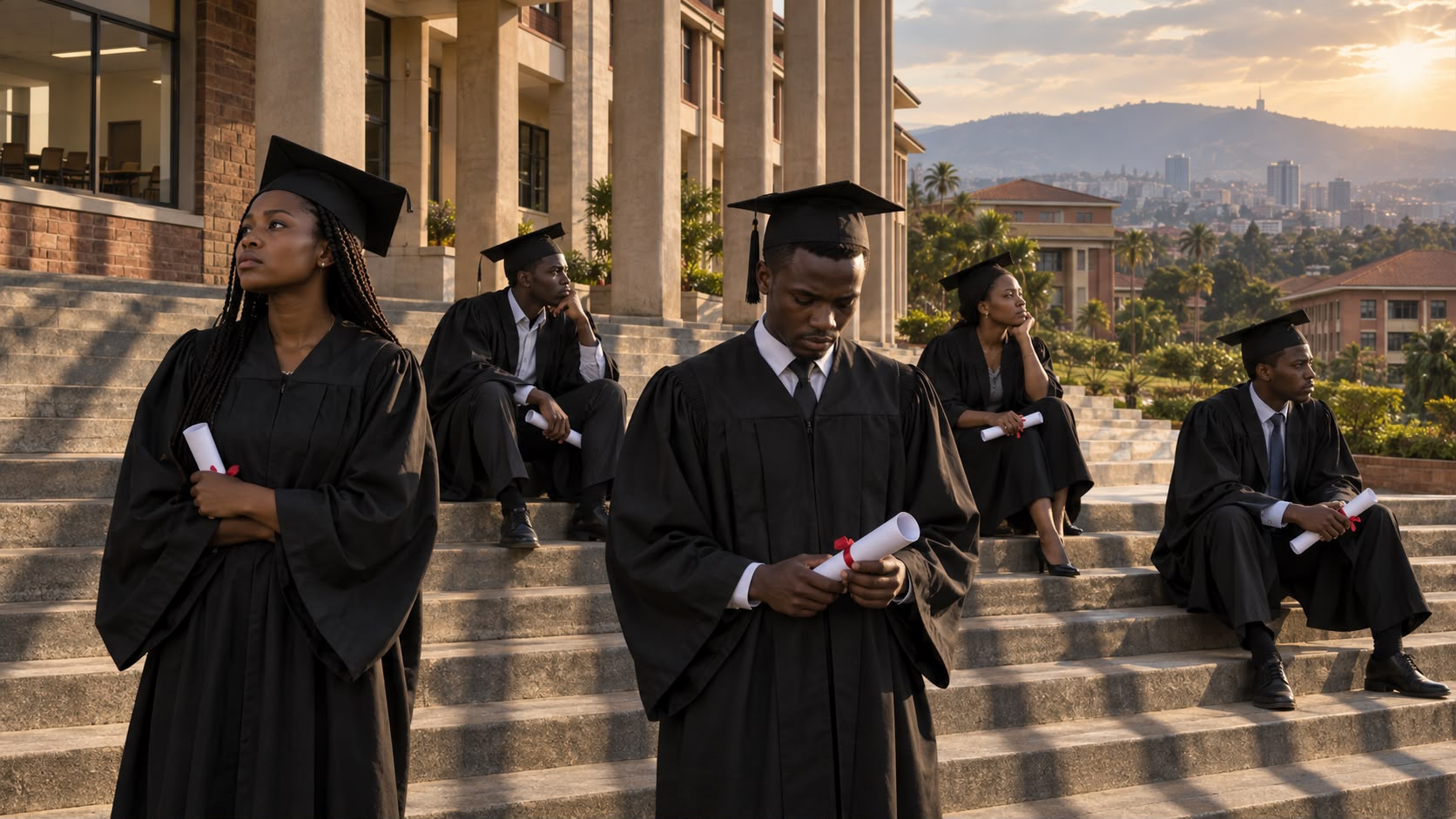
For the average Rwandan child in rural public schools, the policy backfired spectacularly. A generation of students entered the job market functionally illiterate in English and stripped of their professional French. This widespread lack of linguistic competency severely stifled local commerce, crippled cross-border trade with Francophone neighbors like the Democratic Republic of Congo (DRC), and permanently locked a massive percentage of local youth out of high-paying public service and corporate positions.
A High School Dropout at the Helm
Critics point directly to Kagame’s own background to explain this profound contempt for institutional learning. Despite meticulously curated online narratives regarding higher education credentials, evidence indicates that Kagame dropped out of high school, spending his formative adult years entrenched in continuous guerrilla warfare across the region since 1979.
Because he bypassed the academic ladder entirely to secure absolute power through military force, his policies reflect a fundamental disconnect from what it takes to build a stable, domestic intellectual class. To a military autocrat, education is not a human right or a tool for citizen empowerment—it is merely a political dial to be twisted on a whim.
The Shameless Reversal
The ultimate proof of this policy's failure came to light recently. After nearly two decades of forcing English onto a struggling population, Kagame quietly began reintroducing French into the national school curriculum, heavily subsidized by millions of Euros in foreign aid from France.
This dizzying U-turn confirms the tragic truth: Rwanda’s education system is treated like a sandbox for geopolitical games. By using the language of instruction as a political weapon, Kagame has demonstrated a cold indifference to the future of Rwanda's youth, leaving teachers and students to pay the lifelong price for his short-sighted experiments.
Conclusion: No End to the Tragedy
Rwanda remains trapped under the whims of a dictator who fundamentally fails to grasp the importance of education in building human capital and sustaining national socioeconomic development. Real national growth cannot be built on erratic, top-down decrees that treat classroom language as a diplomatic bargaining chip. Until there is an end to the Kagame regime, there will be no end to the educational tragedy forced upon the people of Rwanda.
No comments yet. Be the first to comment.