


The $12B Debt Trap: How Kagame’s Mega-Airport and RwandAir Bleed Cash While Global Aid Vanishes Forcing Him Into Bed With Qatar
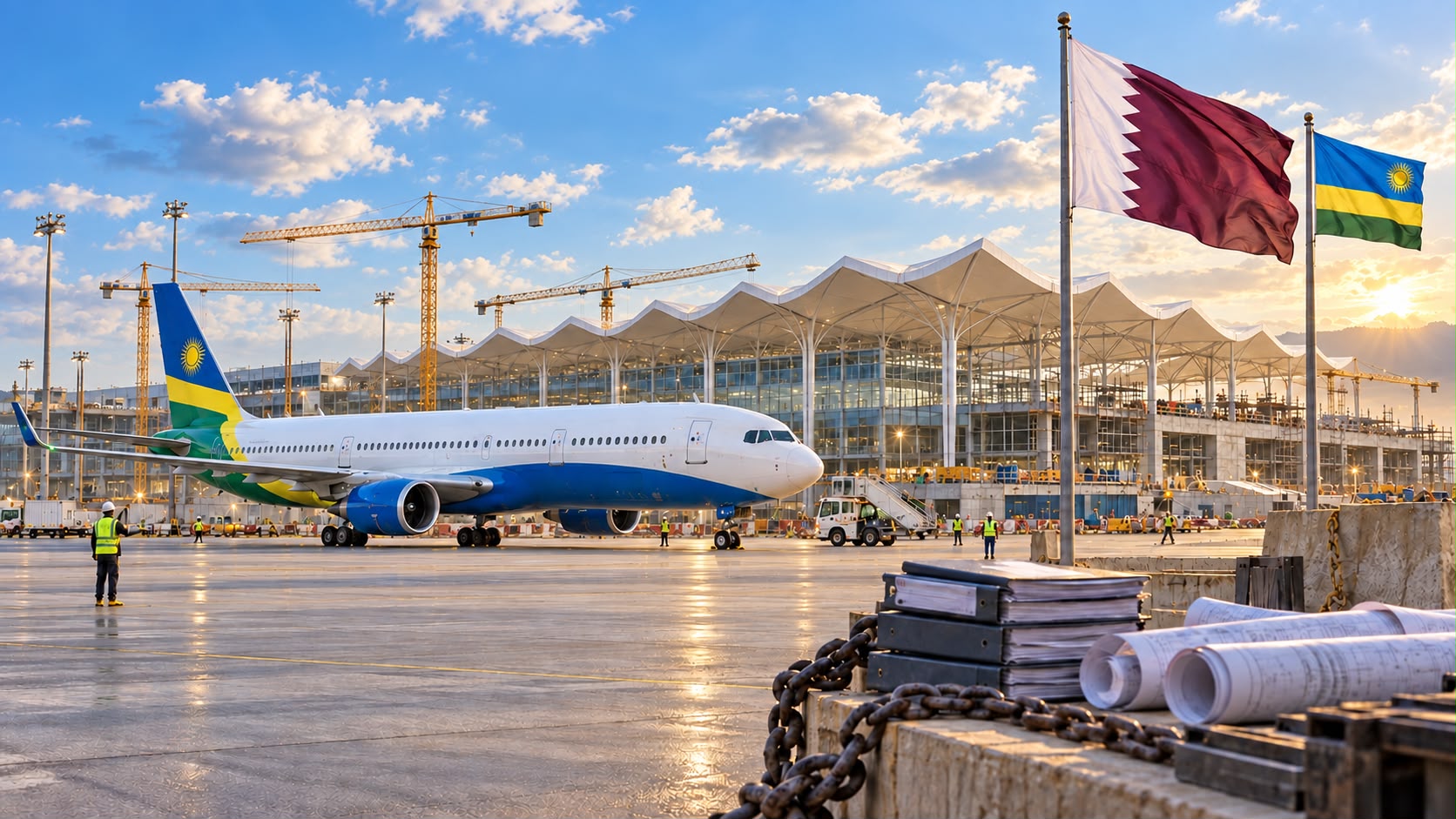
How Kagame surrendered majority control of Rwanda’s strategic new gateway, reducing the nation to a minority shareholder in its own skies.
For years, Rwanda has been celebrated as a beacon of modern African development—a nation rising from its past to build a sleek, tech-driven future. At the heart of this ambitious vision is President Paul Kagame, whose government has consistently bet big on massive infrastructure projects to position the country as a premium regional hub. However, a closer look at the balance sheets reveals a troubling reality: Rwanda’s grandest ambitions are threatening to trap the nation in a dangerous cycle of debt, just as its historic safety net of foreign aid begins to unravel.
The Multi-Billion Dollar Aviation Gamble
The crown jewel of Kagame’s modernizing agenda is the New Kigali International Airport (Bugesera). Total expected costs related to its construction are estimated at a staggering US$2.6 billion through 2029. In parallel, the government plans to pump an additional US$550 million into expanding RwandAir, aiming to turn the national carrier into a global competitor.
While these projects are designed to project power and connectivity, they are burning through capital that Rwanda simply does not have. According to the International Monetary Fund (IMF), the government required an additional US$80 million just to clear the existing debts of RwandAir.
To keep these projects afloat, Kigali has increasingly relied on external partnerships, most notably with Qatar. Through the Qatar Investment Authority (QIA), the government of Rwanda entered into a joint venture where it holds only a 40 percent share in the national airport and a 51 percent share in the national airline.
It is highly alarming that Rwanda has been reduced to a minority shareholder in its own new airport. A premium hub of this magnitude is a key and strategic national asset, critical to the country's long-term economic sovereignty and security. Ceding majority ownership to a foreign power to finance its construction means that while Rwanda bears the domestic economic pressure, a foreign state entity holds the ultimate leverage over its most vital gateway to the world.
A Dangerous Shift in Financing
As traditional funding dries up, Rwanda is turning to riskier financial mechanisms. The International Monetary Fund (IMF) highlights that Rwanda’s current baseline assumes nearly US$800 million in external commercial financing over the 2026–30 period. Moving away from highly concessional loans (low-interest loans typically granted by development banks) toward commercial debt means higher interest rates, shorter repayment windows, and significantly higher default risks.
This reliance on non-concessional external borrowing is driving the country’s debt metrics to historic highs. The IMF projects that the overall public debt level will swell to 79.1 percent of GDP by 2027. Currently, Rwanda’s foreign debt continues to hover around $12 billion, putting immense pressure on the national budget just to service the interest.
The Collapse of Foreign Aid
What makes this debt accumulation uniquely perilous is that it is happening at the exact moment foreign aid to Rwanda has plummeted. Historically, Rwanda has been highly dependent on external assistance in the form of grants and donor-funded programs to balance its budget. Today, that assistance is evaporating.
According to IMF data, the fiscal landscape has grown stark:
The Missing Millions: In FY25/26 alone, US$110 million of required grants will fail to materialize.
Bilateral Cuts: Belgium completely cancelled US$5 million in bilateral support.
The American Withdrawal: The most alarming collapse comes from Washington. United States foreign aid to Rwanda stood at $210 million in 2025. It has cratered to a mere $13 million in 2026.
Whether driven by shifting geopolitical priorities or growing international unease over Kigali’s regional interventions, the loss of hundreds of millions of dollars in free grant money leaves a massive hole in Rwanda's public finances.
What Does the Future Hold?
Rwanda is rapidly approaching a critical crossroads. The strategy of building world-class infrastructure fueled by commercial debt while core revenues and foreign aid decline is a highly volatile economic gamble. If the New Kigali International Airport and a subsidized RwandAir fail to generate rapid, massive returns, the country faces a looming fiscal crisis.
Can Kagame’s premium transit hub model successfully pay off the billions borrowed while being a minority stakeholder, or will Rwanda become a cautionary tale of infrastructure-induced debt?


No comments yet. Be the first to comment.