


The World Bank Lent Kagame $3.1 Billion. Its Own Reports Say Rwanda Is Still Failing.
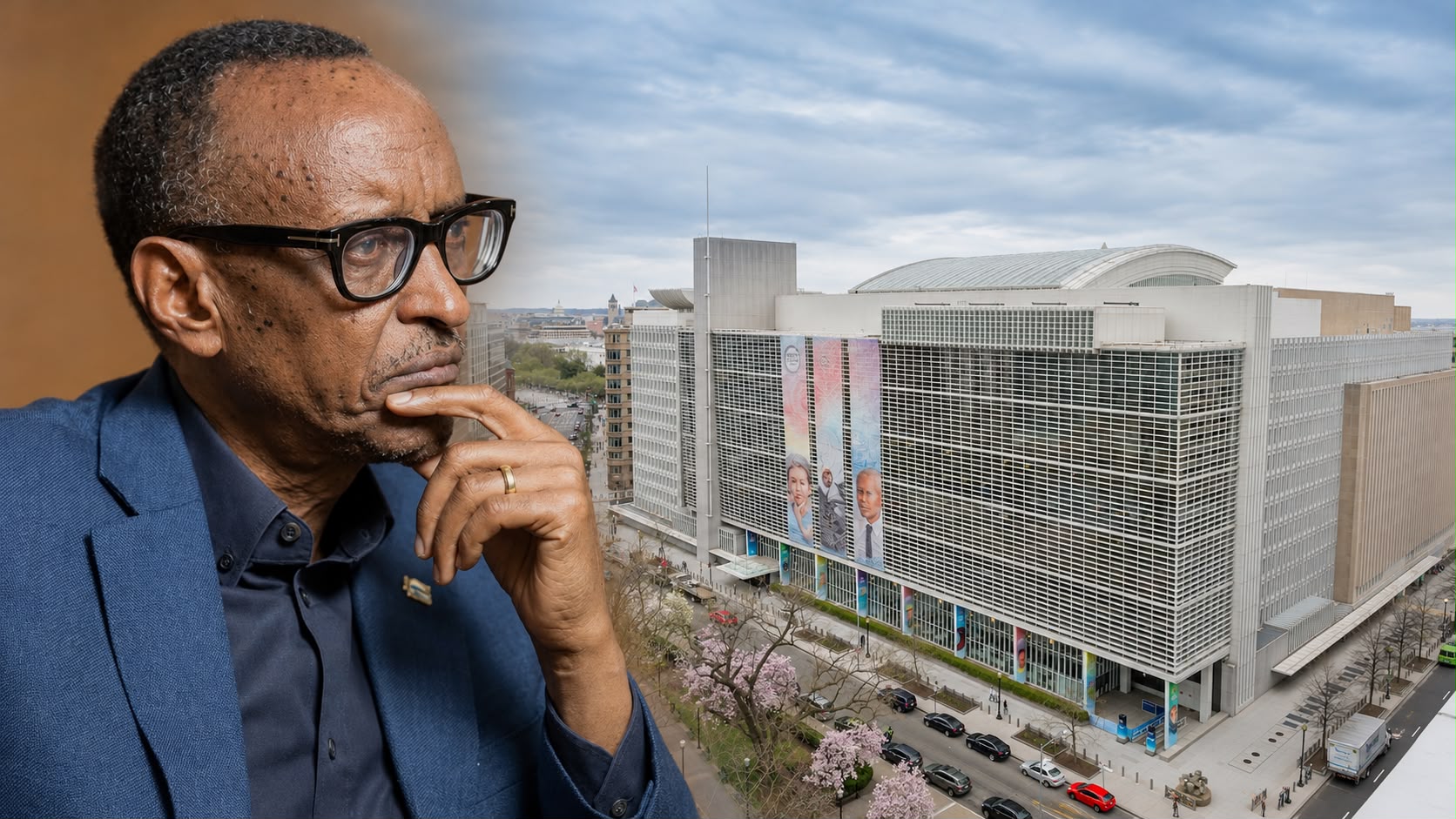
As bilateral donors led by the United States sharply reduce their funding and begin to economically isolate Paul Kagame’s regime, the multilateral institutions that have long bankrolled the dictatorship deserve closer scrutiny. Chief among them is the World Bank. It has poured billions into Rwanda under Kagame. Yet its own assessments paint a picture of stalled transformation, persistent structural failure, and dim prospects for genuine prosperity.
In short: the World Bank has financed the regime heavily while concluding that Rwanda’s socioeconomic trajectory remains essentially dismal.
The World Bank has pumped $3.1 billion of credit into Rwanda during Kagame’s dictatorship in the past three years alone. This is not peripheral support. It is core multilateral underwriting of a system that the Bank’s own diagnostics repeatedly show is not delivering broad-based development. Cumulative commitments over the longer period run far higher, but the recent $3.1 billion figure underscores the scale of continued financing even as results lag.
The Bank identifies the core failures with unusual clarity for an institution that continues to write the cheques. It cites six factors explaining why this significant volume of credit has not made a decisive difference:
1. Job creation in Rwanda remains insufficient and the level of productivity remains low.
2. Major infrastructure gaps persist.
3. Limited progress in innovation.
4. Stalled poverty reduction.
5. Worsening inequality.
6. High level of public debt.
Most new employment is informal, low-productivity, and poorly paid.
Productivity growth has been weak. Infrastructure deficits remain despite years of heavy public investment. Progress on innovation is limited. Poverty reduction has slowed relative to the ambitions repeatedly announced in Kigali. Inequality has not been meaningfully reversed. And public debt has climbed to levels that constrain future room for manoeuvre.
Worst of all is the human capital catastrophe. The World Bank’s Human Capital Index has long ranked Rwanda among the world’s poorer performers. The Bank places Rwanda at 160th out of 174 countries on the measure of how much human capital a child born today can expect to attain by age 18. Billions in external finance, including the recent $3.1 billion, have not closed that gap.
The Bank documents these failures. It does not take responsibility for them. It continues to lend. It continues to issue measured language about “progress relative to income level” while the underlying constraints—low productivity, weak job quality, high debt, and human capital deficits—remain largely intact. The regime gets the money and the photo opportunities. Ordinary Rwandans get the structural dead ends.
This is the essential contradiction. The World Bank is Kagame’s most important remaining multilateral funder at a moment when bilateral partners are walking away. Yet the Bank’s own analysis shows that the model it has financed—with $3.1 billion in recent credit alone—has not produced the transformation it claims to support. The jobs are not there at the required scale or quality. The infrastructure deficits persist. Innovation lags. Poverty reduction has not matched the propaganda. Inequality endures. Debt is elevated. And human capital remains a national failure.
In the next article we turn to the International Monetary Fund and the same pattern of financing without fundamental results.
The numbers and the diagnostics are not secret. They sit in the Bank’s own reports. The only question is how long the multilateral system will keep underwriting a regime whose development model its own experts describe as insufficient.
Discussion
No comments yet. Be the first to comment.