


Absolute Power Is Dangerous — How Kagame Trapped Rwanda in a $13 Billion Debt and a 15% Wealth Collapse in Six Years
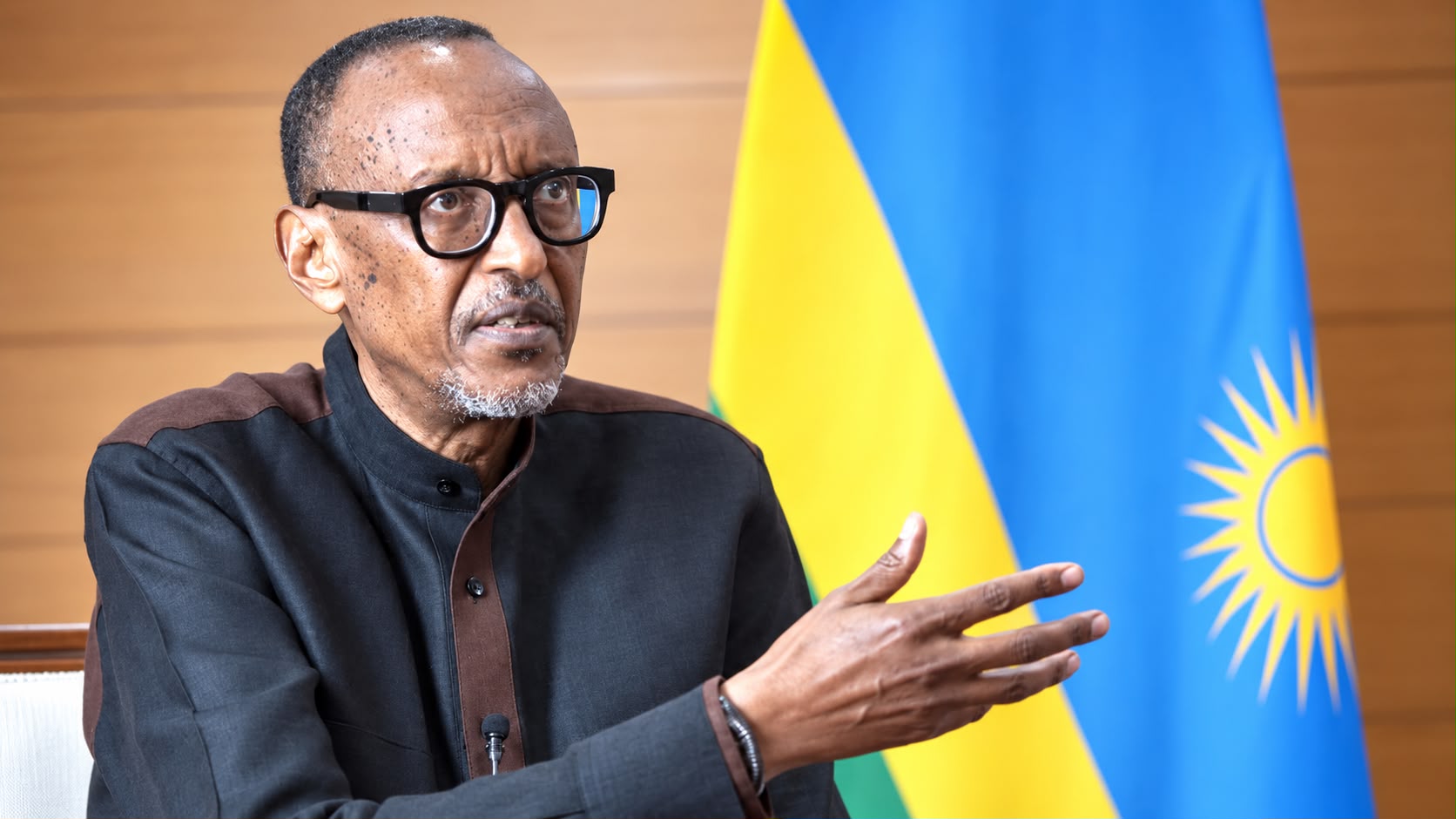
Rwandan head of state General Paul Kagame markets the country as a hyper-efficient modern state, an economic powerhouse, and a model of disciplined governance. But behind the polished public relations campaigns, a devastating fiscal crisis is unfolding in broad daylight. Driven by absolute executive control and a completely unchecked regime, the nation's financial foundations are rapidly crumbling, leaving the public entirely defenseless against an impending crash.
Look no farther than the fact that Kagame’s executive branch has no oversight whatsoever. Rwanda's legislative budget oversight mechanism is a total non-starter. Critics rightly label the country's legislative defenses a joke. Absolute power has stripped Kigali of its financial safety nets, driving the nation into a severe structural, economic, and political crisis.
1. The Numbers Don't Lie: A 5-Person "Office"
Let’s look at the sheer operational capacity inside Kigali's parliament. Reports out of international financial assessments reveal that Rwanda's legislative budget framework relies on a skeleton crew of just five staff members tasked with auditing an entire nation’s public accounts.
You cannot audit a multi-trillion-franc national budget with a team that can fit inside a single rideshare vehicle. Five clerks aren't an independent parliamentary watchdog; they are a rubber stamp with a payroll.
2. The Smoking Gun: The IMF Details a Wealth Collapse
The devastating consequences of this complete lack of oversight were laid bare in the IMF's June 2026 Rwanda Fiscal Transparency Evaluation Update. The figures reveal a staggering deterioration of the state's financial health. The IMF explicitly documented that:
"Estimates of the public sector balance sheet indicate a decline in net worth from 63 percent of GDP in FY2017/18 to 48 percent in FY2023/24."
This massive asset drain means that under the current regime, Rwanda's overall public wealth has plummeted by 15 percentage points of GDP in a mere six years, fueled by explosive central government debt and soaring liability accumulation. Yet, because the 5- clerk "budget office" is entirely toothless, there is absolutely zero institutional capacity within the Rwandan Parliament to alert the public to this ongoing disaster or alter the country's dangerous fiscal trajectory.
3. The Reversal of Fortune: Drowning in a $13 Billion Debt Wave
While national wealth bleeds out, Rwanda's public debt is skyrocketing out of control. Total external public debt has surged past $13 billion USD, driving the overall public debt-to-GDP ratio to a staggering 74.8% and rapidly approaching the 80% ceiling.
What makes this debt crisis truly tragic is the short historical memory of the regime. Just over a decade ago, international donors under the Heavily Indebted Poor Countries (HIPC) Initiative effectively wrote o: nearly all of Rwanda's bilateral and multilateral debt obligations. This historic write-o: slashed Rwanda's debt from a crushing 119% of GDP down to a clean, pristine 19.5% in 2008.
The global community gave Rwanda a clean slate and a completely fresh financial start. In hindsight, that collective global effort was completely wasted. The regime has squandered its debt-free cushion on massive, low-return prestige infrastructure projects—such as the endless cash-burn of RwandAir and bloated convention centers—recreating the exact same debt trap that external donors saved them from.
4. The Illusion of Representation: A Built-In Rubber Stamp
By design, the Rwandan Parliament lacks the foundational political independence to challenge executive overreach. It does not operate as a separate branch of government; it functions as an institutional extension of the ruling party.
President Paul Kagame routinely claims landslide election victories exceeding 99%. This math filters directly down into the legislative branch, making actual oversight a functional impossibility. Furthermore, the mechanics of how lawmakers achieve office systematically choke out independent dissent:
- No Direct Individual Accountability: Everyday citizens in Rwanda do not cast ballots for specific, independent local representatives in the Chamber of Deputies. Instead, the system relies strictly on a closed-list proportional framework. Political parties hand-pick and rank their preferred loyalty lists. If a lawmaker steps out of line or attempts to rigorously audit executive spending, the party simply removes them from the list.
- The Senate is an Executive Appendix: The upper house—the Senate—is completely insulated from public accountability. President Kagame directly appoints the President of the Senate and 20% of its members. The remaining seats are parceled out through indirect elections heavily monitored by government administrative councils and university state bodies—entities whose leaders are also appointed by Kagame.
5. The Regional Contrast: How Kenya Does It
To understand exactly how compromised Rwanda's system is, one only needs to look across the border. When comparing public financial oversight in East Africa, a sharp contrast emerges between Kigali's empty formalities and genuine institutional independence.
For years, Kenya's Parliamentary Budget Office (PBO) has stood as the gold standard of legislative oversight in Africa—a non-partisan powerhouse that aggressively audits the executive branch and destroys bad budgets before they become law. Under Kenya's Public Finance Management (PFM) Act, 2012, the Kenyan PBO gives parliament actual teeth.
While Rwanda relies onfivesubmissive clerks, Kenya’s PBO is an elite, fully staffed directorate packed with dozens of macroeconomists, fiscal analysts, and public policy experts who generate alternative data to challenge the National Treasury. If the executive branch in Nairobi tries to hide billions in unbacked loans or presents bloated fiscal projections, Kenya’s PBO calls it out publicly. The Kenyan office regularly issues biting public warnings on multi-billion funding gaps, student loan defaults, and fiscal risks. In Rwanda, there is zero adversarial friction; parliament simply eats whatever numbers the executive's Ministry of Finance and Economic Planning (MINECOFIN) feeds it.
6. The Data Gaps and Plummeting Oversight Scores
The Open Budget Survey (OBS) completely exposes the weakness in Rwanda's legislative framework when held up to regional benchmarks. While Rwanda scores high on clean audits after money is already spent, its parliamentary oversight score has collapsed—dropping drastically in recent cycles down to a miserable 47 out of 100.
Furthermore, international development tracking demonstrates that international partners have slashed their use of Rwanda's Public Financial Management systems, with massive chunks of development aid completely bypassing legislative oversight. External donors know the Rwandan Parliament doesn’t have the staff, the tools, or the political freedom to trace where the money goes.
The Bottom Line
If a parliament cannot independently verify revenue, cannot draft its own economic forecasts, and has to review a mountain of sovereign debt with only five overworked staffers appointed by the ruling party, it does not possess a budget office. It possesses a mirage.
When the executive branch writes the laws, designs the party lists, and appoints the legislative leadership, any talk of a "budget watchdog" is political theater. Absolute power has left the pilot entirely alone in the cockpit. A five-person committee checking the receipts of the man who hand-selected them isn't oversight. It's a clerical performance while public sector net worth bleeds out and a $13 billion debt bomb ticks in broad daylight.
Discussion
No comments yet. Be the first to comment.