


Kagame’s Rwanda Remains Very Poor and Vulnerable While the Future Prospects Are Grim — The World Bank Latest Data Reveals
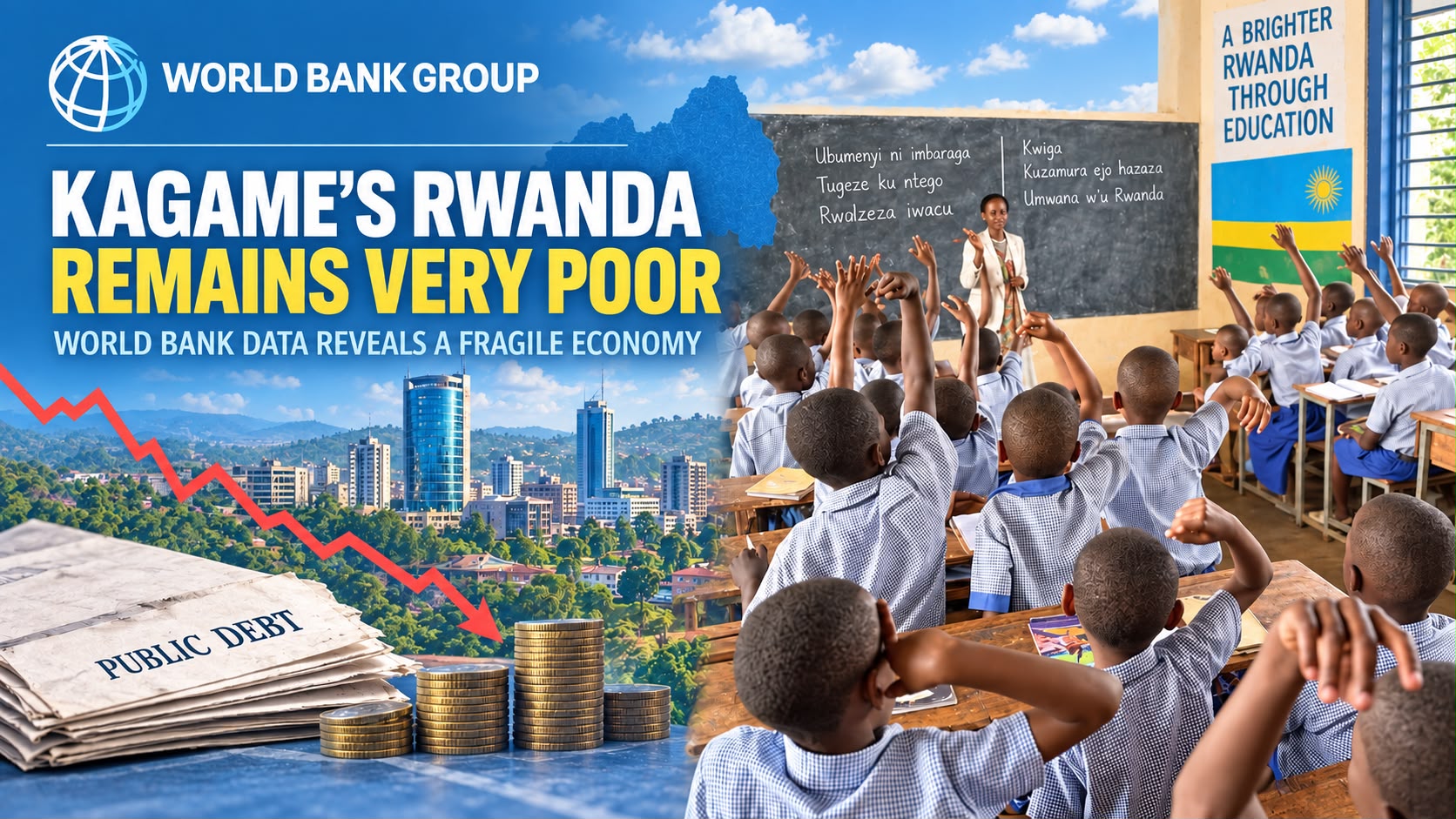
The latest data from the World Bank paints a bleak picture of Rwanda’s economic reality, casting a long shadow over the Paul Kagame regime's celebrated "developmental success story." Despite years of high-profile PR campaigns, the metrics reveal a nation that remains trapped in poverty and heavily exposed to economic shocks.
The GDP Per Capita Reality Check
When compared to its East African neighbors, Rwanda continues to lag behind. Its Gross Domestic Product (GDP) per capita sits at a modest $1,123. This places Rwanda firmly behind regional peers like Kenya ($2,362), Tanzania ($1,318), and Uganda ($1,206).
Job Stagnation and Weakening Poverty Reduction
The economic growth Rwanda has experienced is failing to lift the general population. According to the World Bank’s assessment, the country is facing a severe crisis in job creation, productivity, and equality:
"The creation of jobs in Rwanda is insufficient, and the level of productivity remains low, reflecting infrastructure gaps, limited progress in innovation, and sub-optimal allocative efficiency. The inclusiveness of growth remains a key challenge, as the momentum in poverty reduction has weakened in recent years. The benefits of structural transformation have tended to accrue to more educated workers, worsening inequality." (https://www.worldbank.org/ext/en/country/rwanda)
Furthermore, Rwanda remains one of the world's poorest performers in human capital development, ranking a dismal 160th out of 174 countries.
A Ballooning Debt Crisis
Adding to these structural vulnerabilities is Rwanda's rapidly rising public debt. Driven by heavy public spending, the country's public debt is projected to surge past 77% of GDP by the end of 2026, limiting the government's fiscal breathing room.
The Solution the World Bank Wants vs. Rwanda's Reality
The World Bank argues that the remedy to these compounding crises is a robust, dynamic private sector:
"Overcoming these challenges will require greater reliance on private sector investment to enhance productivity growth, raise incomes, and provide the financing to address infrastructure shortfalls."
However, this prescription ignores a fundamental political roadblock: the Kagame regime has systematically stifled the rise of an independent private sector. Instead of fostering open market competition, the state has actively promoted the business empire of the ruling party, Crystal Ventures Ltd (CVL).
CVL is not just a company; it is an omnipresent economic force. It spans every critical sector in Rwanda, leaving virtually no room for independent competition. From civil engineering and road construction via NPD Ltd, to armed security and cash transport via ISCO, to the very milk and water citizens drink via Inyange Industries—the ruling party owns the economy.
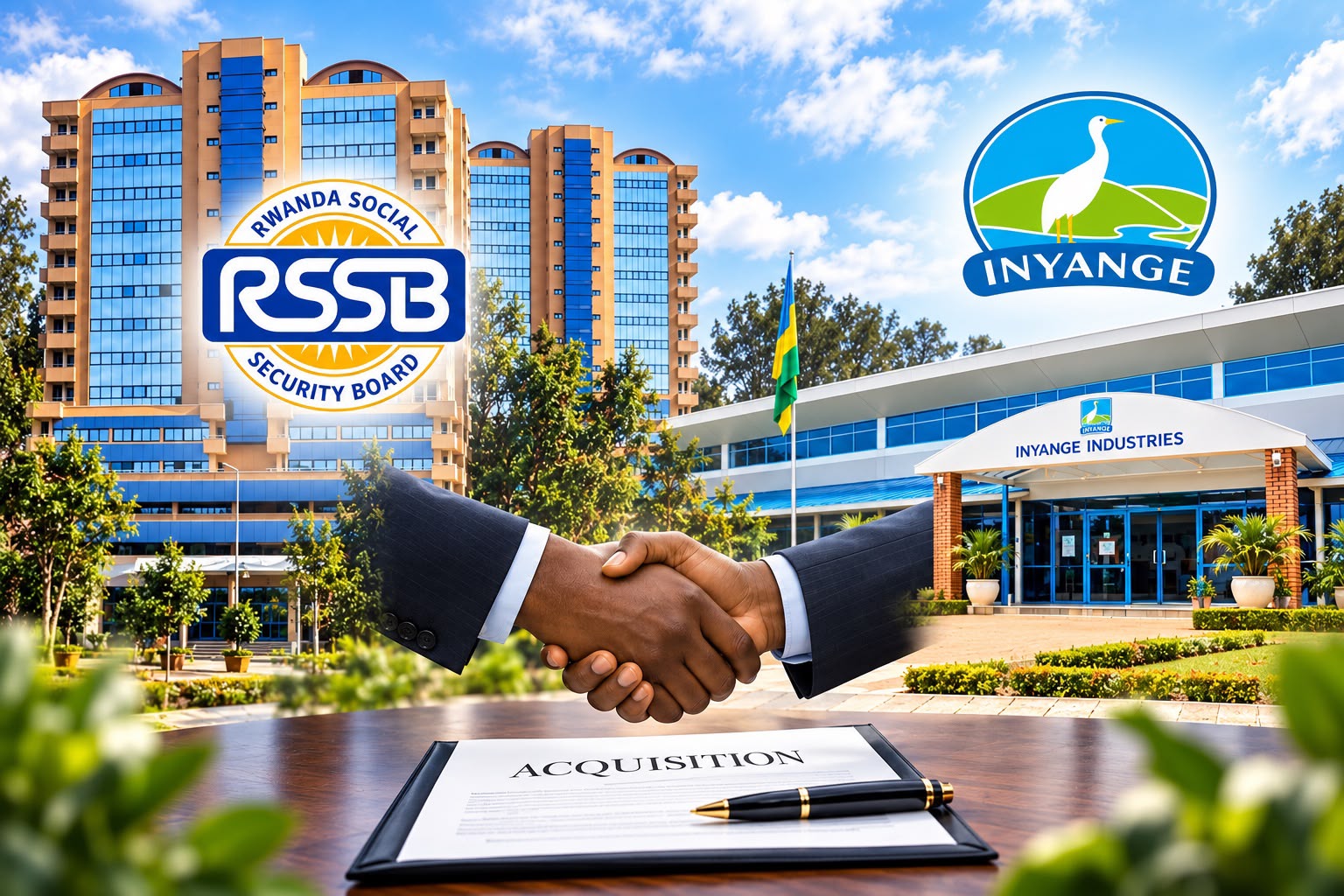
When a single political entity controls the food, the infrastructure, the security, and the natural resources of a nation, a true independent private sector cannot survive. It is this total market suffocation that explains why CVL is currently in the news for selling its subsidiary companies to Rwanda Social Security Board (RSSB).
Meanwhile, over the years, prominent Rwandan entrepreneurs have faced mysterious deaths, asset seizures without compensation, or forced exile. Today, CVL continues to consolidate its economic grip. A prime example is its recent move to sell its subsidiaries— Inyange Industries Ltd and Ruliba Clays—not to independent private buyers, but to RSSB. By offloading these assets onto the national pension fund, the ruling party has effectively turned the RSSB into an instrument of state capture.
The Bottom Line
Without an autonomous private sector to drive innovation and create jobs, Rwanda’s economic model remains a fragile illusion. Burdened by debt and constrained by the ruling party business monopolies, the country's economic prospects look increasingly grim.

No comments yet. Be the first to comment.