


Why Rwanda’s Education System Is in Shambles: Kagame’s Reckless Language Experiment and Its Devastating Toll
Auditor General findings and 18 years of language-policy upheaval reveal a system struggling with delayed materials, teacher shortages, and weak outcomes.
The 2025 Auditor General Report exposes severe textbook delays and unused training materials as Rwanda continues to grapple with the consequences of its abrupt switch to English instruction.
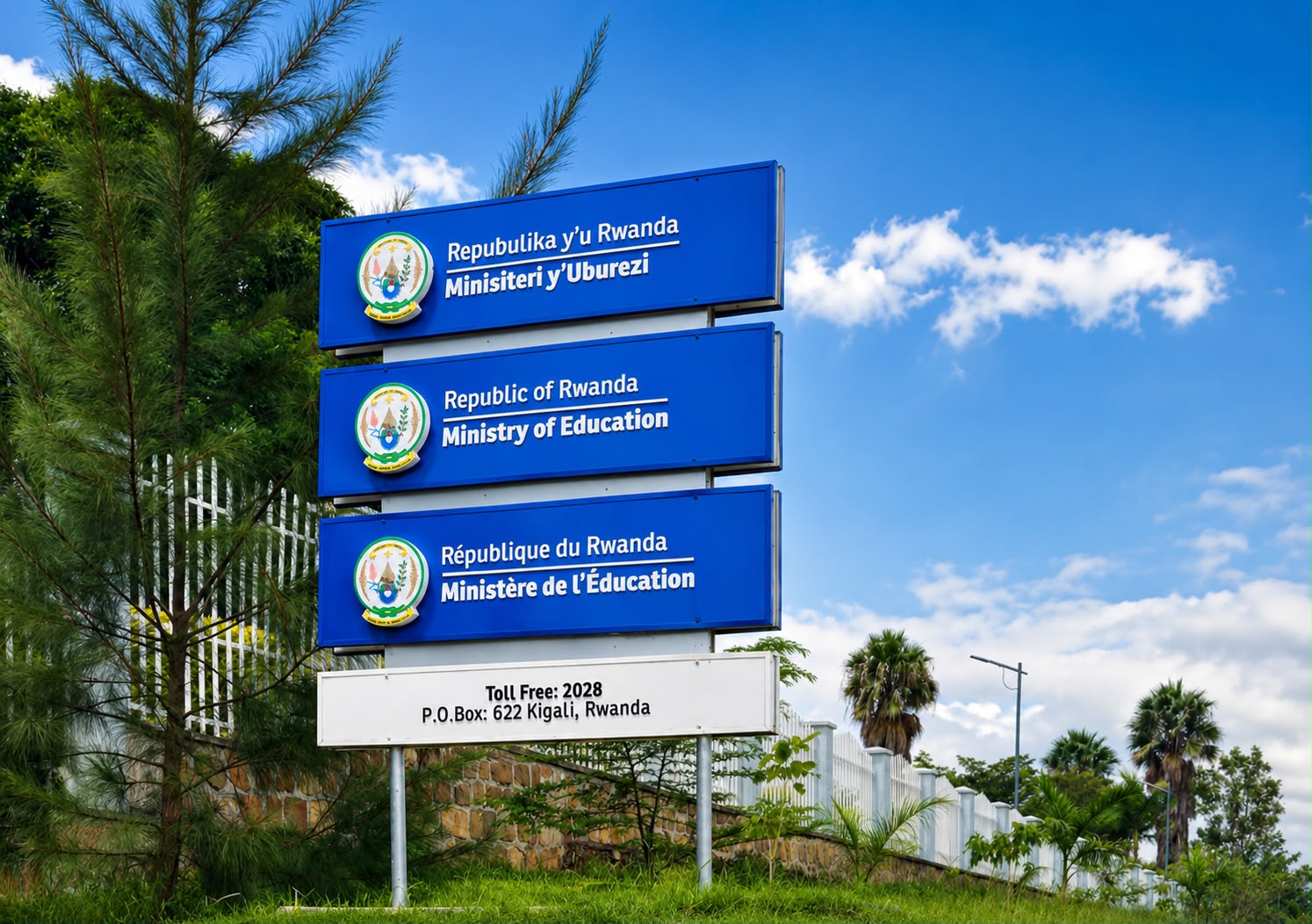
The 2025 Auditor General Report exposes Rwanda’s education failures under President Paul Kagame. On January 12, 2021, the government ordered 396,000 pre-primary teacher’s guides and textbooks worth USD 393,480, but the books arrived at the supplier’s warehouse on March 24, 2025. Despite an audit in April 2026, the regime had not provided a distribution plan, causing a 397-day delay. On May 9, 2024, the Rwanda Education Board ordered 616,000 primary and secondary textbooks worth RWF 832.32 million, but they remained in the supplier’s warehouse after 240 days. For TVET programs, an inspection of 75 schools revealed that 197 out of 336 training manuals were unused, hindering vocational education.
Rwanda’s education system is a catastrophic failure since 2008 — a damning testament to President Paul Kagame’s impulsive, top-down governance that consistently prioritizes political optics over the future of Rwandan children. For nearly two decades, Kagame’s hasty decisions have inflicted lasting damage on the nation’s human capital, leaving generations of students struggling in a dysfunctional system plagued by incompetence and endless foreign band aids.
The prime example of this disaster is the abrupt 2008 switch from French to English as the medium of instruction in a predominantly French-speaking country that had virtually no English-proficient teachers. This wasn’t thoughtful reform — it was a knee-jerk political stunt.
The Political Roots of a Disastrous Policy
The roots trace back to 2003 when Kagame began eyeing Commonwealth membership. A formal application was lodged in 2008, with Rwanda joining as the 54th member in 2009. Desperate to impress, Kagame rammed through an immediate language overhaul.
In October 2008, a cabinet resolution dictatorially mandated English as the primary medium of instruction nationwide. Schools were forced to transition in early 2009 after nothing more than rushed, inadequate crash courses for teachers. No proper planning, no sufficient materials, no realistic timeline — just chaos imposed from above.
This reckless move bypassed all standard processes and inflicted immediate harm on students and educators alike.
Failed Fixes and Endless Dependence on Foreign Imports
Predictably, the policy collapsed under its own weight. Initial attempts to import teachers from Uganda and Kenya were abandoned due to crushing costs.
Since 2022, Kagame has turned to Zimbabwe for rescue:
- First Cohort (late 2022): 154 teachers imported to act as educators and trainers, mostly in Teacher Training Colleges (TTCs).
- Second Cohort (December 2025): 143 more arrived.
- Total: Roughly 297 Zimbabwean expatriates now propped up the system.
These imported specialists are not just teaching kids — they are desperately “training the trainers” in TTCs while covering English, Mathematics, Science, Technology, and Health Sciences. The Rwandan government showers them with generous salaries scaled by qualifications, free furnished housing, full healthcare, and extensive support.
Eighteen years after the disastrous switch, Rwanda is still begging foreign countries to supply basic English competence.
This is not progress — it is a humiliating, expensive indictment of Kagame’s failed leadership.
Classrooms remain crippled by teachers ill-equipped for English instruction, students lost in a foreign language (especially in rural areas), and a chronic lack of resources. The result: disrupted learning, widespread confusion, and entrenched inequality.
A Regional Laggard with Dismal Human Capital Outcomes
It is no surprise that Rwanda ranks abysmally in global human capital development. As the World Bank bluntly reports:
“The creation of jobs in Rwanda is insufficient, and the level of productivity remains low, reflecting infrastructure gaps, limited progress in innovation, and sub-optimal allocative efficiency. The inclusiveness of growth remains a key challenge, as the momentum in poverty reduction has weakened in recent years. The benefits of structural transformation have tended to accrue to more educated workers, worsening inequality. The World Bank’s Human Capital Index, which measures the amount of human capital that a child born today can expect to attain by age 18, places Rwanda at 160th out of 174 countries.”
World Bank — Rwanda
Rwanda further lags badly behind its East African peers — particularly Kenya, Uganda, and Tanzania — in university and higher education. While neighbors have cultivated more robust, respected university systems with stronger enrollment, research capacity, and graduate outcomes, Rwanda’s tertiary sector remains weak, underdeveloped, and scarred by the same foundational failures. This regional backwardness severely undermines the country’s ability to compete and innovate.
Education is the foundation of any nation’s future. Kagame’s authoritarian style — acting first and thinking never — has produced one predictable disaster after another. The English-language fiasco is not an isolated blunder; it is emblematic of a governance model that sacrifices real development for spectacle and control.
Rwandan children deserve far better than this endless cycle of disruption, dependency, and dashed potential. Until the regime confronts these self-inflicted wounds with honest reforms — rather than more imported quick fixes — Rwanda’s education system will remain in ruins, holding back the entire country for years to come.
The time for excuses is over. The future of Rwanda’s youth hangs in the balance.
No comments yet. Be the first to comment.