


Rwanda’s Agricultural Boasts Are Embarrassing: The Real Numbers Behind the Propaganda
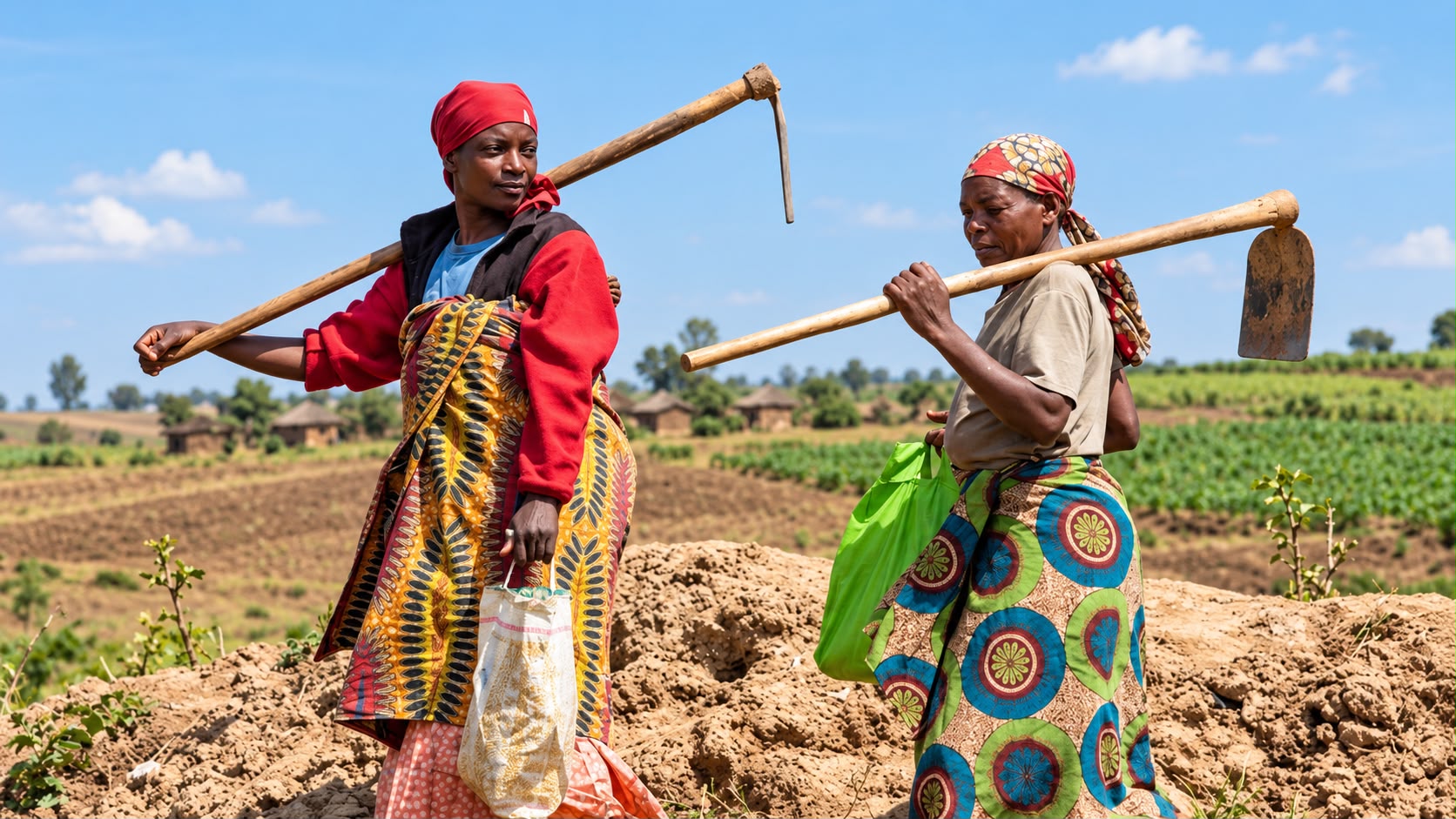
The Kagame regime frequently uses the agricultural sector as a cornerstone of its economic success narrative. Official state media and government reports consistently broadcast impressive-sounding statistics to demonstrate how Rwanda is modernizing.
However, a closer look at the actual data reveals a starkly different reality. While the government celebrates massive milestones, the underlying economics show a nation deeply trapped in trade deficits and systemic poverty.
The Trade Deficit: A 90.33% Reality Check
The most glaring contradiction in the regime's narrative lies in its trade balance. The government proudly boasts that agricultural export revenues reached USD $893.2 million in the 2024/2025 fiscal year.
What the state apparatus conveniently minimizes is the cost of feeding the nation. Rwanda remains heavily reliant on foreign agricultural and food imports to supplement domestic production. The country spends a staggering $1.7 billion annually to import essential goods like non-fillet frozen fish, raw sugar, bulk grains, edible oils, and fertilizers.
When you look at the math, Rwanda’s agricultural imports are 90.33% larger than its exports. The country is spending nearly double what it earns just to keep basic food and farming inputs flowing across its borders.
The 6 Big Boasts of the Kagame Regime
To maintain its image of a rising economic tiger, the government regularly highlights six key metrics regarding agriculture's contribution to national development:
- 1—The Girinka Programme: The government claims significant social progress has been made through this "One Cow per Poor Family" initiative, stating that more than 450,000 households have received cows so far.
- 2–Expanded Irrigation: Official statistics note that irrigated land across the country now stands at 74,375 hectares.
- 3–Export Revenues: The regime continuously highlights the USD $893.2 million generated from agricultural exports in 2024/2025.
- 4–Modernized Inputs: Reports state that nearly 40 percent of Rwandan farmers use improved seeds, while more than 64 percent apply mineral fertilizers, allegedly leading to higher yields in maize, rice, potatoes, and beans.
- 5–GDP Contribution: In 2025, the agricultural sector officially accounted for 20 percent of Rwanda’s Gross Domestic Product (GDP).
- 6–Rural Employment: The sector is consistently framed as the primary source of employment and economic stability for rural households.
The Reality: A Trap of Mass Poverty
Behind these polished metrics lies a grim social reality. Agriculture in Rwanda is not a gateway to prosperity; for the vast majority, it is an inescapable economic trap.
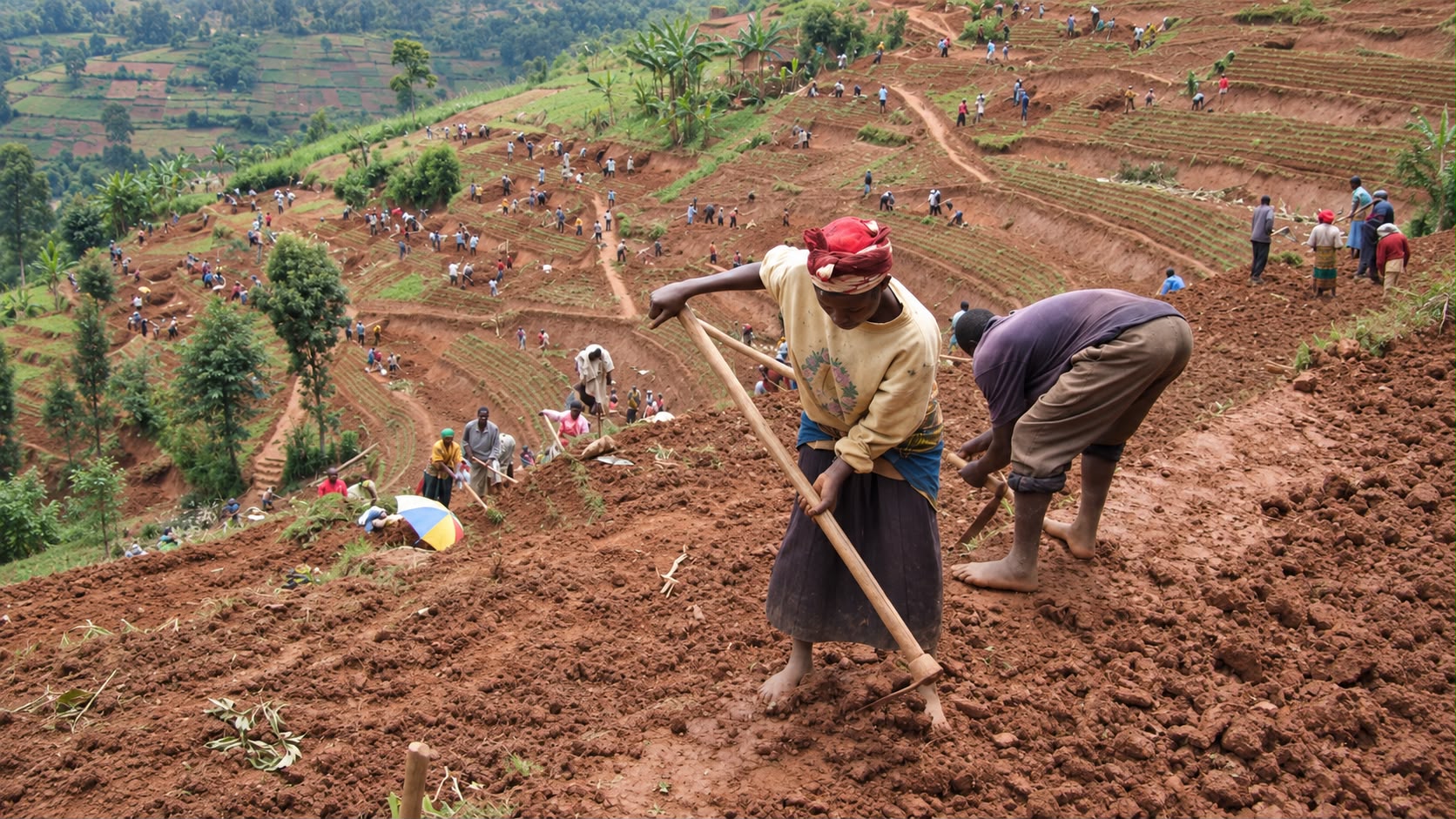
While the sector is labeled a "major source of employment," it primarily functions as a reservoir for mass poverty of Rwandans trapped in temporary daily-wages with no security whatsoever.
Out of Rwanda’s 4.7 million working population, a staggering 91.2% operate within the informal sector. Most of these informal workers are concentrated in subsistence agriculture, followed closely by low-tier wholesale and retail trading.
For the average citizen, this translates to a precarious existence characterized by part-time labor, unpredictable daily wages, and a lack of social safety nets. Instead of driving sustainable economic development, the agricultural sector currently anchors millions of Rwandans to a cycle of mass poverty.
The regime’s boastful rhetoric simply cannot mask the structural failure of an economy that imports far more food than it manages to sell.
Conclusion: The Mirage of Progress
Ultimately, the Kagame regime’s agricultural strategy is built on a foundation of smoke and mirrors. Shiny public relations campaigns about cows, fertilizers, and irrigation cannot hide the structural failure of a state that relies on nearly double its export earnings just to feed itself.
True economic development does not look like a 90% trade deficit, nor does it look like trapping nine out of ten workers in unstable, informal poverty. Until Rwanda moves away from boastful statistics and addresses the reality of its dependent food markets and exploited workforce, its agricultural narrative will remain a tragic illustration of propaganda masking systemic failure.
Discussion


No comments yet. Be the first to comment.