


Behave on the DRC or Lose Your Health Funding and American Private Investment: Washington Snaps the Leash on Kagame
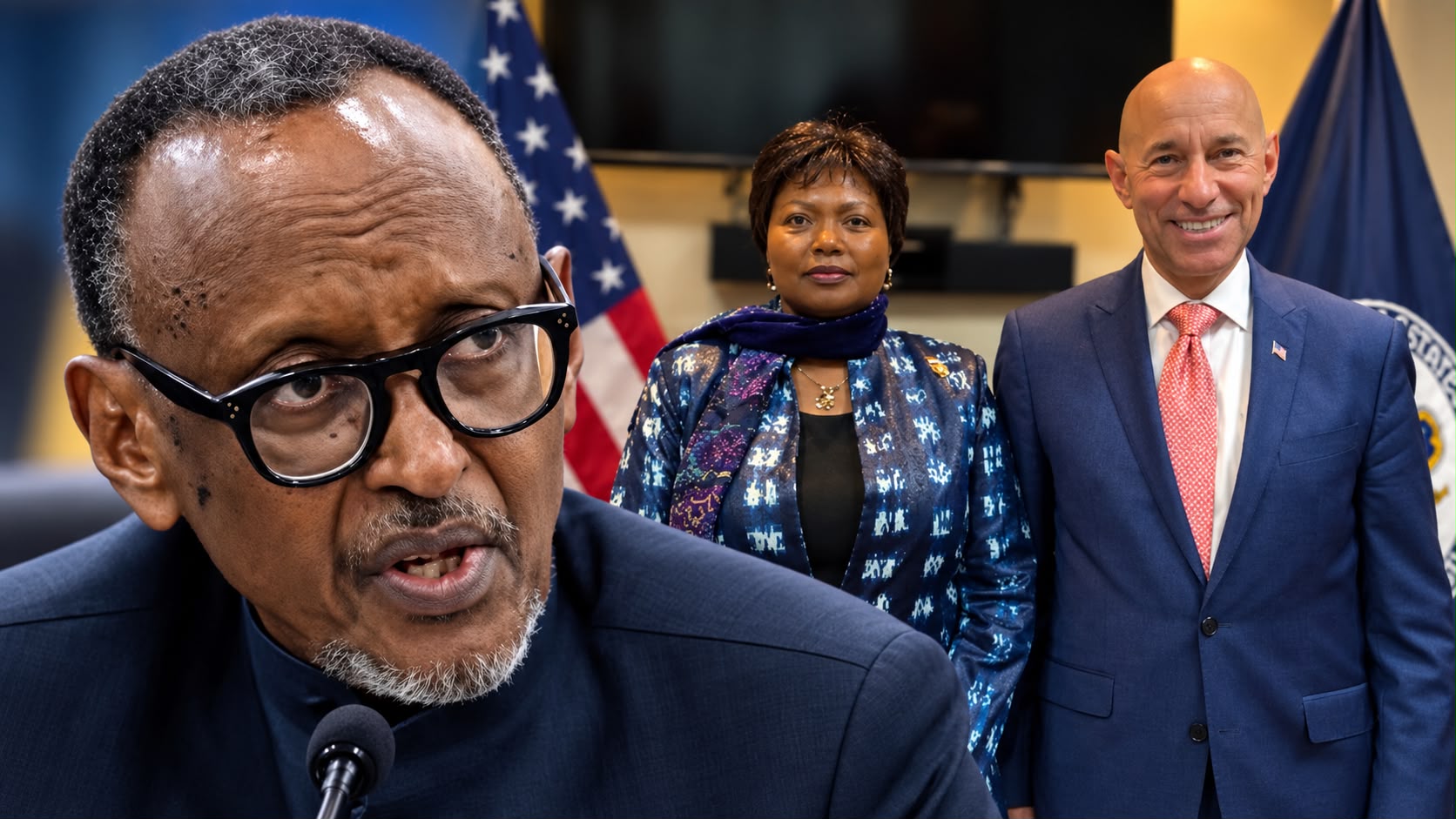
Following repeated reminders from the United Nations and the U.S. government that he must end support to his M23 militia and withdraw his military from the Democratic Republic of the Congo (DRC), Washington has officially turned up the heat on Rwandan President Paul Kagame.
In a high-stakes meeting with Rwandan Ambassador to the U.S. Mathilde Mukantabana, Assistant Secretary Garcia delivered a blunt ultimatum: Rwanda must uphold its obligations under the Washington Accords. This includes an immediate halt to all support for M23 and the total withdrawal of Rwandan forces from the DRC.
Secretary Garcia didn't mince words, insisting that “full implementation is the foundation for lasting peace in the Great Lakes region and will open the door to new investment and deeper economic ties that bring mutual prosperity.” The message between the lines was unmistakable: behave or face the consequences.
Kagame Stands to Lose Plenty: The $228 Million Health Care Ultimatum
Kagame’s continued military adventures in the DRC risk destroying one of his country's most lucrative partnerships: the United States-Rwanda Bilateral Health Cooperation Memorandum of Understanding. Signed under the framework of the America First Global Health Strategy, this partnership commits both nations to a five-year, $228 million health care package.
Under the agreement, the U.S. is slated to inject $158 million over the next five years, while Rwanda contributes $70 million. If Washington pulls the plug, Rwanda's healthcare infrastructure will face a devastating financial vacuum.
Weaponizing American Private Investment
This partnership is about more than just aid; it is a critical vehicle for American commercial interest and technological expansion in Africa. By defying Washington, Kagame threatens to isolate Rwanda from cutting-edge U.S. private sector investment.
The current agreement builds on several landmark commercial initiatives that are now hanging in the balance:
· Zipline International Inc.: Building on a major award, this initiative supports the construction of American-made advanced robotics for delivering life-saving medical products. As the earliest adopter of Zipline’s technology in Africa, Rwanda is responsible for operating this cutting-edge supply infrastructure funded by U.S. assistance.
· Ginkgo Bioworks: The arrangement includes $10 million for the American tech firm to expand disease outbreak surveillance in Rwanda, establishing a "biothreat radar system" to monitor potential outbreaks across the broader region.
· Future Tech & AI Partnerships: The framework outlines extensive plans for Rwanda to receive U.S. private sector investment to develop next-generation HIV treatments and deploy artificial intelligence (AI) in healthcare.
The current framework was designed to reaffirm a strong U.S.-Rwanda bilateral relationship, safeguarding health gains while eliminating dependency, ideology, and waste. It was pitched as a win-win: saving U.S. taxpayer dollars while delivering durable health outcomes for Rwanda.
So Which Way Is Kagame Headed?
Kagame now stands at a critical geopolitical crossroads. He can choose to maintain his destabilizing military foothold in the DRC, or he can secure the economic and physical health of his own nation by falling in line with the Washington Accords. Washington has made its terms clear. The leash has snapped tight, and the next move is entirely up to Kigali.
Discussion

No comments yet. Be the first to comment.