


The Ultimate Mirage: Why Kagame’s "Universal Healthcare" Success Is a Deadly Illusion
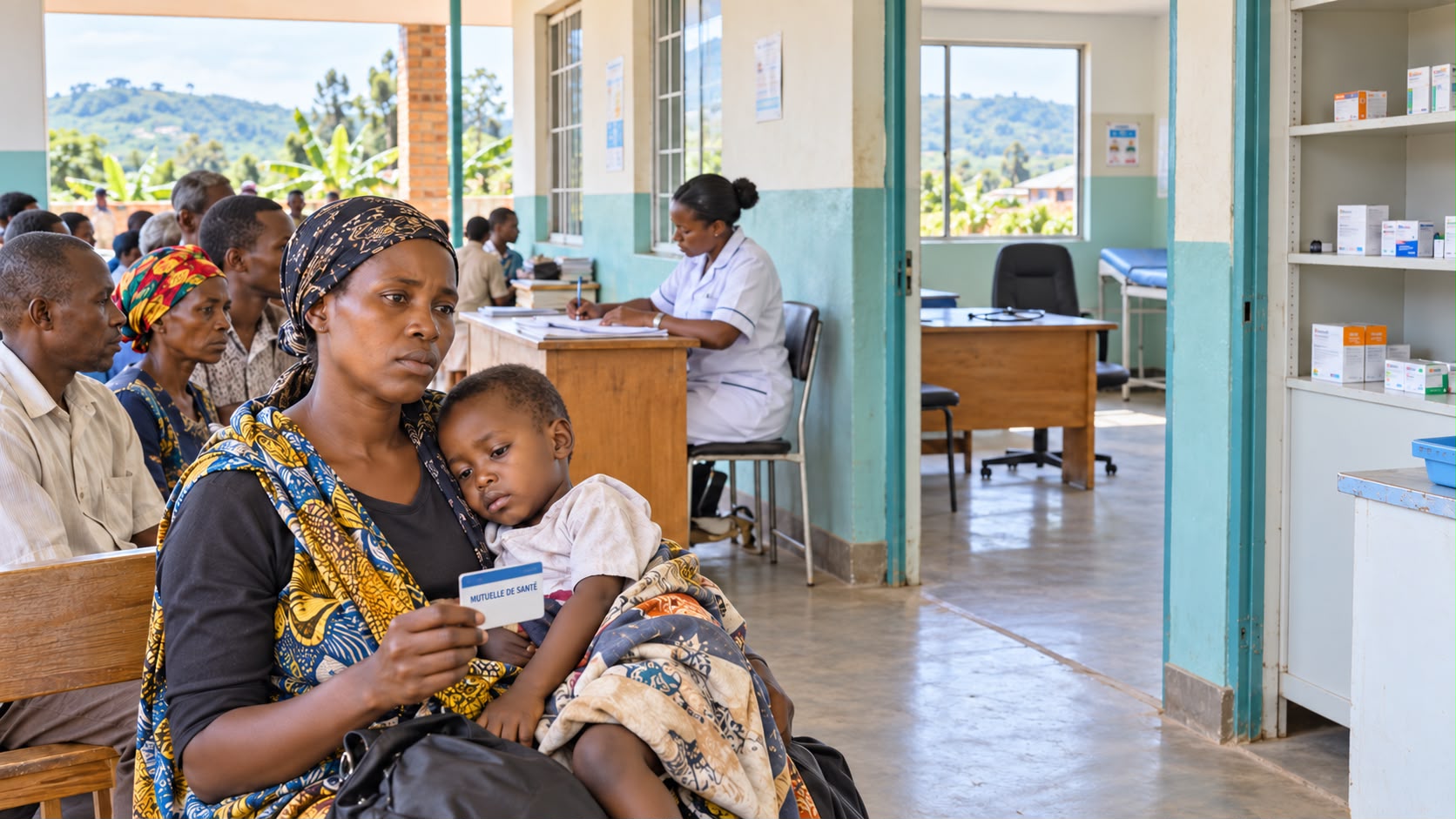
For over three decades, the international community has coddled the Rwandan regime, eagerly swallowing a carefully curated myth of developmental exceptionalism. When critics point out the absolute decimation of civil liberties, the silencing of journalists, and an economy choked by ruling-party monopolies, apologists scramble for their ultimate shield: the Rwandan healthcare miracle.
We are told that Paul Kagame, through sheer administrative brilliance, built Mutuelle de Santé—a community-based universal health insurance system that covers over 90% of the population. It is heralded as the regime’s single, unassailable domestic triumph in 32 years of absolute power.
But pull back the glossy PR curtain, examine the brutal data on the ground, and the miracle vanishes. What remains is a devastating truth: Rwanda’s universal healthcare is a cruel bureaucratic mirage. A plastic insurance card means absolutely nothing when there is no one on the other side of the hospital doors to save your life.
The Numbers Don't Lie: A Nation Without Doctors
A healthcare system requires two fundamental pillars: a way to pay for care, and the human beings capable of delivering it. Kagame’s regime focused entirely on the paperwork while completely failing the human beings.
The structural metrics of Rwanda’s medical workforce are not just lagging—they are catastrophic for a population of nearly 15 million people:
• The Doctor Vacuum: Rwanda operates with just over 1,100 registered medical doctors for the entire country.
• The Pharmaceutical Abyss: The state possesses a microscopic 55 licensed pharmacists nationwide.
• The WHO Red Line: The World Health Organization (WHO) states that a functional health ecosystem requires a minimum of 4.45 health workers per 1,000 people. Rwanda is marooned so far below this threshold that it isn't even in the same stratosphere.
Think deeply about what these numbers actually mean. If you divide 15 million citizens by 1,100 doctors, you get an astronomical ratio of over 13,000 patients to a single physician. If you look at pharmacists, the ratio is a staggering, dystopian 270,000 citizens to one licensed pharmacist.
To call this a "functional universal healthcare system" is an insult to human intelligence. It is a paper-shuffling exercise designed to look good on a United Nations spreadsheet while doing nothing to solve structural human desperation.
The Two-Tiered Deception: Triage for the Poor, Elite Care for the Regime
How does a country survive with virtually no doctors or pharmacists? It survives by drastically lowering the bar of what constitutes "healthcare."
To mask the total lack of qualified medical professionals, the RPF regime deployed an army of 45,000 Community Health Workers (CHWs). These are minimally trained, unpaid village volunteers elected to hand out basic antimalarials, treat routine diarrhea, and pass out condoms.
This is the core of the illusion. If you are a rural peasant suffering from uncomplicated malaria, the system "works" because a neighbor can hand you a packet of pills. The regime points to this bottom-tier triage to boast about plummeting mortality statistics.
But the moment a Rwandan citizen suffers from anything complex—a cardiac anomaly, a malignant tumor, a complicated fracture, or a neurological disorder—the mirage evaporates entirely:
• The Urban Monopolization: The few specialized physicians and resources that actually exist are heavily sequestered in Kigali, trapped behind the walls of elite, expensive facilities like King Faisal Hospital.
• The Death Sentence Waiting List: For a rural citizen in the western or southern provinces, a referral to see a specialist is effectively a death sentence. The waiting lists stretch out for months, sometimes over a year, because a handful of specialists cannot physically treat millions of people. Your subsidized insurance card cannot perform open-heart surgery, and it cannot manufacture chemotherapy drugs.
The Late Panic: The 4×4 Reform is a Confession of Failure
The ultimate proof that Rwanda’s universal healthcare is an empty shell comes directly from the regime itself. In late 2023, facing an undeniable collapse of its medical infrastructure, the Ministry of Health was forced to publicly panic, admitting that its medical workforce density was profoundly unsafe.
This panic triggered the frantic deployment of the "4×4 Reform"—a desperate, top-down mandate to quadruple the intake of medical and nursing students overnight. The state is now scrambling to force underfunded local institutions to pump out medical graduates and shipping cohorts off to foreign nations just to learn the basics of specialization.
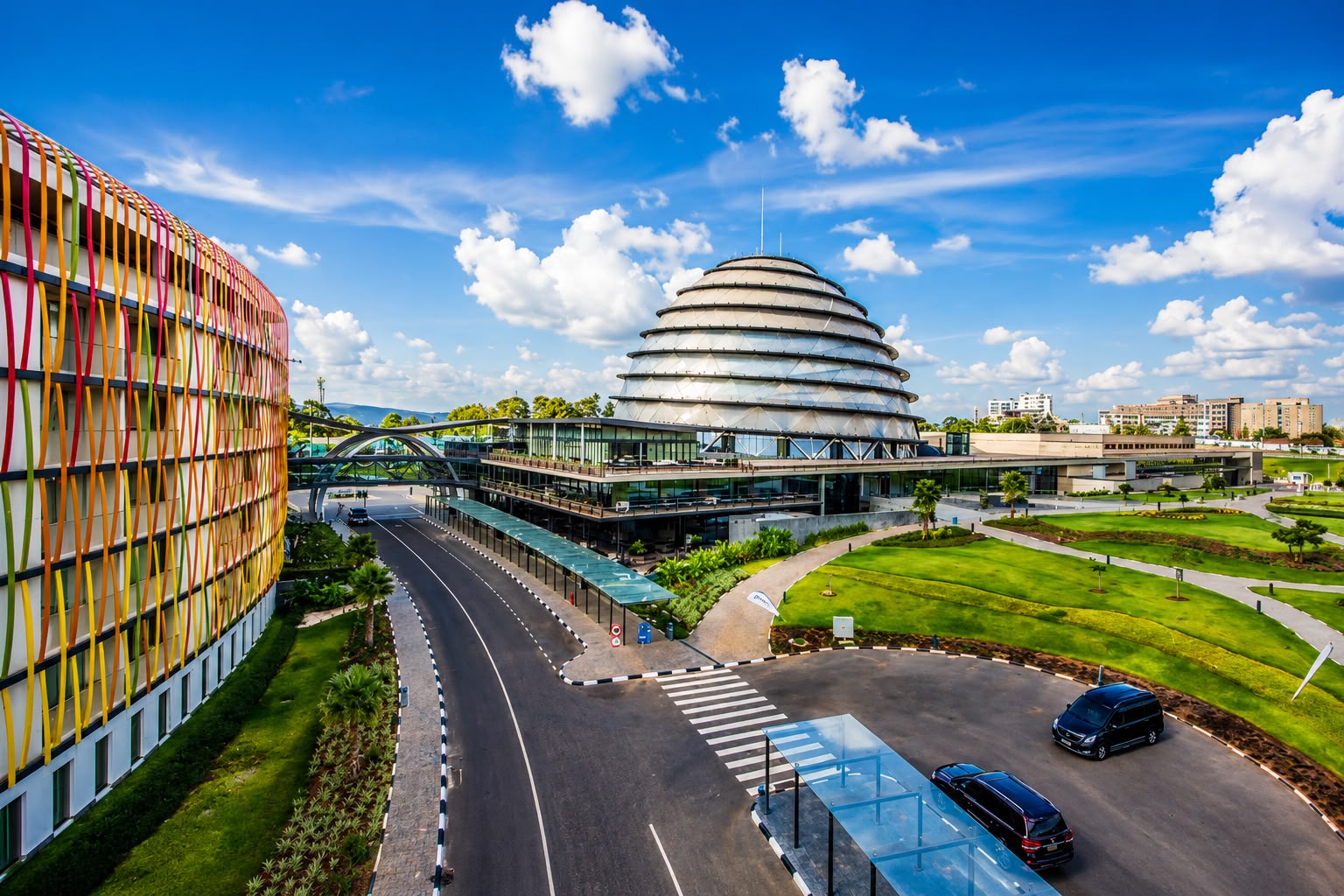
This frantic, last-minute mobilization isn't a forward-thinking policy; it is an open confession of a 30-year failure. It is an admission that for three decades, while the regime poured millions into PR firms, high-tech conference centers, and elite tech hubs to mimic development, it completely ignored the foundational human capital required to keep its population alive.
Conclusion: The Potemkin Healthcare System
Paul Kagame’s legacy is built on the concept of the Potemkin village—a flawless, polished facade constructed to hide a hollow interior. His IT sector is a ghost town of 19,000 jobs choked by the ruling-party monopoly of Crystal Ventures. His universities rank dead last, turning out functionally unready graduates.
And now, the final pillar of the regime’s legitimacy crumbles under closer inspection.
Universal healthcare in Rwanda is not a triumph of social engineering; it is a cruel lottery. It is a system that hands a desperately poor population a plastic card entitling them to free care, while hiding the fact that the hospital beds are empty, the pharmacies are unstaffed, and the doctors do not exist. After 32 years of absolute rule, Kagame’s single "success" turns out to be exactly like the rest of his developmental narrative: a beautifully packaged, deadly mirage.


No comments yet. Be the first to comment.