


Kagame’s Newest Pipeline: How the Regime Is Capturing Rwanda’s Refined Petroleum Value Chain
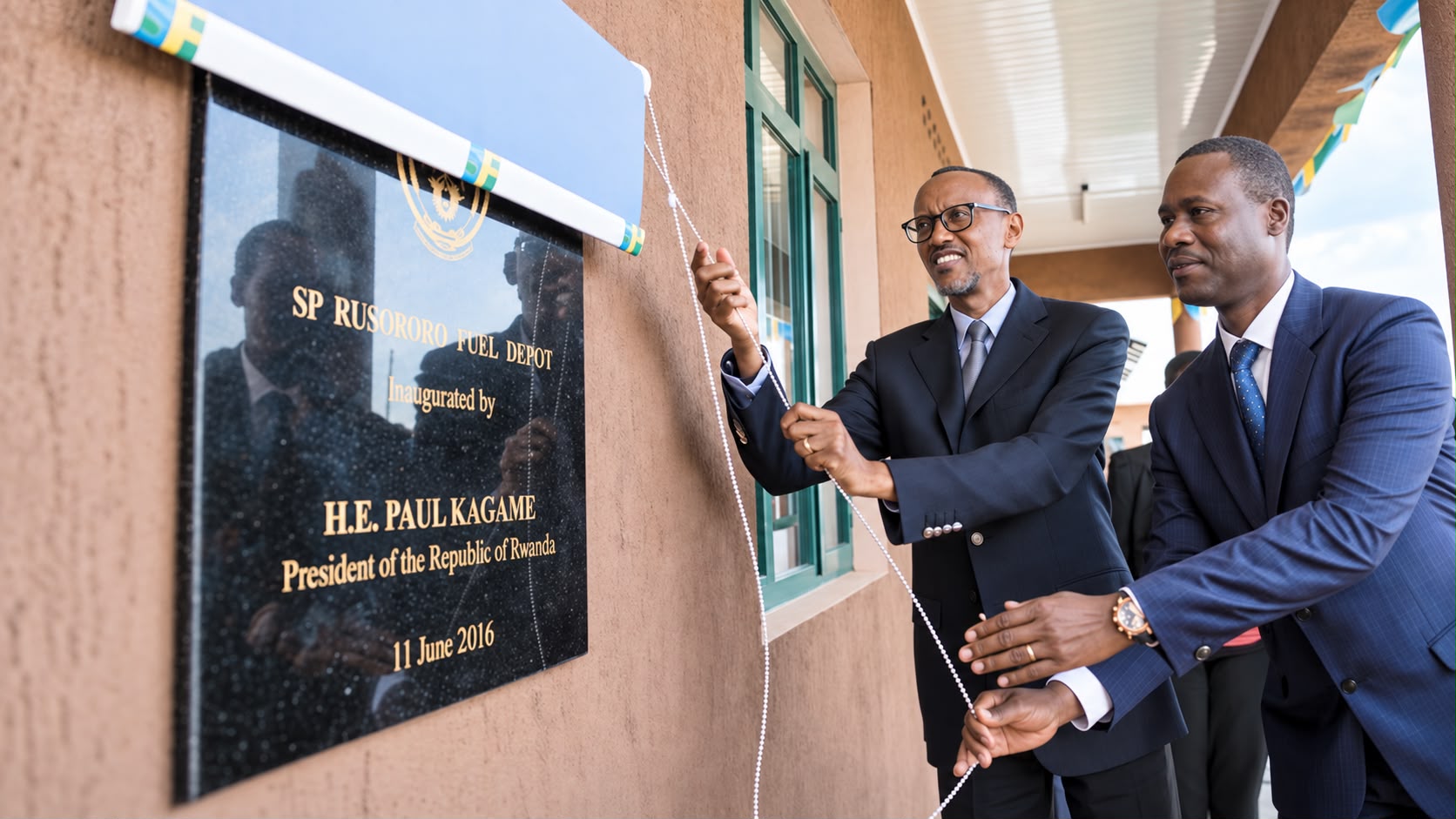
The Rwandan government’s latest import of 40,000 tonnes of refined petroleum via Kenya looks like a victory for national energy security on paper. In reality, it is a masterclass in state-monopolized cronyism. By completely freezing out independent private operators, General Paul Kagame’s regime has cleared the runway for centralized corruption disguised as regional diplomacy.
The Diplomatic Smoke and Mirrors
On September 29, 2026, the vessel MT Sea Wolf docked at Kenya’s Port of Mombasa, carrying 40,000 metric tonnes of refined petroleum products. Regional energy ministers gathered to celebrate the activation of a newly forged Government-to-Government (G2G) framework between Kenya and Rwanda, sourced via Oman's OQ Trading.
State media immediately hailed the shipment as a milestone for the Northern Corridor. Officials project that Rwanda's fuel transit volumes through Kenya will scale tenfold to over 500,000 cubic metres annually.
On the surface, diversifying national supply routes away from total reliance on Tanzania's Central Corridor looks like a smart, strategic play. But beneath the diplomatic fanfare lies an aggressive, state-monopolized arrangement. The regime is bypassing the free market to capture the entire petroleum value chain.
The Void Where the Private Sector Used to Be
What makes this deal highly unusual—and deeply troubling—is the complete absence of independent commercial players. This massive procurement wasn't negotiated or won through competitive bidding by a consortium of domestic fuel distributors. Instead, it is entirely controlled under the facade of the state-run Rwanda National Energy Company (RNEC).
This absolute centralization raises critical logistical and financial questions that the Rwandan government has conveniently left unanswered:
· Monopolized Transport: Moving 500 million litres of fuel annually from western Kenya's pipeline terminals to Kigali requires an immense fleet of specialized tankers. If independent, private trucking companies are locked out, who gets the lucrative state transport contracts?
· Controlled Storage: Bulk fuel requires vast, highly secure strategic storage reserves. By shutting out private storage firms, the state keeps the keys to the nation's physical energy reserves in the hands of a select few loyalists.
Clearing the Field: The Demise of Independent Operators
The total state control we see today with RNEC didn't happen overnight. It is the culmination of a decades-long campaign to eradicate genuine economic independence in Rwanda.
The last truly independent business in Rwanda’s petroleum industry belonged to Valens Kajeguhakwa and his sons. Their fallout with the regime provides the ultimate playbook for how Kagame treats independent wealth.
Years ago, Kagame aggressively seized Kajeguhakwa’s bank, the Banque Continentale Africaine du Rwanda (BACAR), forcing the businessman to flee into exile in the United States.
In a calculated move, Kagame later enticed Kajeguhakwa to return to Rwanda from his American exile, offering a false sense of security. But once he was back within reach, Kagame turned against him yet again. The family’s independent business footprint was systematically dismantled.
The final blow to local, independent energy distribution came when the family’s Gatsata petroleum depot—run by Valens' son, Serge Kajeguhakwa, under Energy Resources Petroleum (ERP)—was forcefully seized and auctioned off directly to regime insiders. With the Kajeguhakwas permanently pushed out and international giants like US multinational Chevron and Saudi Arabia's Bakri International Energysystematically forced to exit the country, the free market was completely liquidated.
The SP Monopoly: A Good Idea with a Rotten Core
With all authentic competition wiped from the map, Société Pétrolière (SP) was crowned the undisputed, lone giant of Rwanda's petroleum landscape. Today, SP stands as the only significant petroleum company left in Rwanda—a dominance built entirely on political muscle rather than market merit.
Controlled by Kagame family frontman Egide Gatera, SP's expansion has been actively bankrolled by the state:
· Direct State Subsidies: The regime's blatant favoritism peaked when the government directly handed public land and capital to SP, expanding its storage capacity at the Rusororo Depot to 60,000 cubic metres.
· The Gatekeeper Status: Backed by state resources, SP moved to selling over 150,000 cubic metres of refined products annually. It now operates a network of over 60 service stations nationwide, acting as the absolute gatekeeper for commercial, industrial, and national fuel supplies.
In a healthy economy, the benefits of a G2G deal—such as Kenya extending its tax-free fuel storage window from 35 days to 90 days—would trickle down to everyday citizens, resulting in cheaper prices at the pump. Independent private companies would bid for transport and storage contracts in a transparent market, driving down operational costs through healthy competition.
Instead, the game is rigged.
The Bottom Line
By funneling the new G2G Kenya deal entirely through the state-run RNEC, the regime ensures that the profits, transport contracts, and distribution rights will inevitably flow right back into this protected, elite network. This "elite network" is simply another name for SP, the Kagame family, and their inner circle.
The MT Sea Wolf didn't just deliver fuel to Mombasa; it delivered a stark reminder that in Kagame’s Rwanda, national energy security is just another vehicle for institutionalized cronyism.
Discussion
No comments yet. Be the first to comment.