


The Kigali Mirage: Why Chery’s $39M EV Assembly Plant Is Destined for the Junkyard
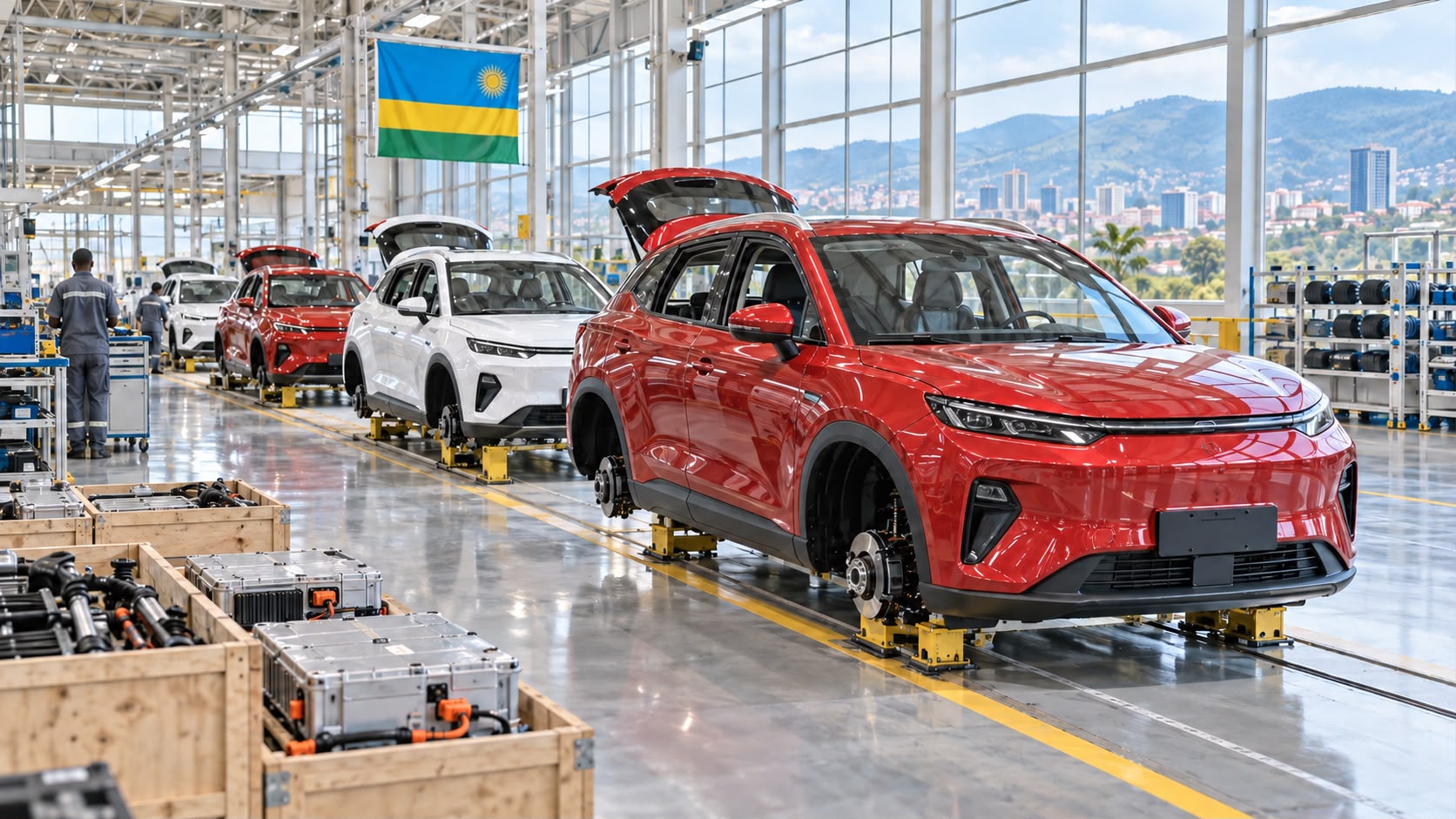
The headlines out of Kigali are once again screaming with triumphant self-congratulation. On September 18, 2026, the Rwandan Cabinet rubber-stamped a strategic investment agreement with Chery Holding Rwanda Ltd to establish an electric vehicle (EV) assembly plant. It feels like déjà vu all over again. We are expected to marvel at the numbers: a $39.25 million indicative investment value and the promise of 2,000 direct jobs. President Paul Kagame and Chery’s vice president, Xu Hui, have already completed their ceremonial dances at Village Urugwiro.
But beneath the glossy PR veneer of "green energy transition" and "regional e-mobility gateways" lies a brutal, unvarnished economic reality. This project is dead on arrival.
Before anyone cracks open the champagne to celebrate this "developmental milestone," it is imperative to ask a simple question: What actually became of the Volkswagen assembly plant?
Cast your mind back to the loud noises and political theatre that accompanied the VW launch. Kagame proudly boasted that German engineering was rolling off Rwandan assembly lines. It was hailed as the dawn of a new industrial era. Flash forward to the present day: the project has quietly evaporated from the headlines.
The grand industrial dream didn't build a robust domestic automotive market; it devolved into a glorified, Uber-like ride-hailing service for hire. The factory floor became a parking lot for corporate transport because a retail consumer market for those cars simply did not exist.
The failure of VW—and the inevitable failure of Chery—stems from a refusal to acknowledge the fundamental, systemic limits of Rwanda's macroeconomic landscape.
1. The Domestic Demand Deficit & Credit Crunch
With a gross domestic product (GDP) per capita hovering at a meager $1,123, the purchasing power parity required to absorb brand-new vehicles is non-existent. A standard EV, even a budget model assembled by Chery, represents a capital expense that is orders of magnitude higher than the annual income of the average Rwandan.
Furthermore, 91.2% of the population is trapped in the informal economy. In economics, an informal workforce means a lack of verifiable credit scores, predictable monthly paystubs, and formal banking relationships. This completely destroys the possibility of consumer automotive financing. You cannot build a car industry on cash-and-carry purchasing when the population is engaged in subsistence and informal labor. Without a robust local banking sector underwriting thousands of auto loans, the inventory will simply sit on the lot.
2. The Power Paradox: High Tariffs and Grid Limitations
Automotive assembly plants, particularly those processing heavy electric vehicle batteries, require immense, cheap, and uninterrupted industrial power. Rwanda’s utility infrastructure is nowhere near ready to carry this burden.
Rwanda’s average commercial and residential electricity costs have ranked among the highest in Sub-Saharan Africa, hovering at around $0.295 per kilowatt-hour (kWh) before tax. This is over 20% more expensive than the upper limits found in neighboring East African countries. Furthermore, the country's actual dependable grid capacity is tightly constrained, frequently requiring energy imports from neighboring countries to balance peak demand. Saddling a fragile, expensive power grid with a heavy industrial manufacturing load—while demanding that the same grid charge a new fleet of EVs—is a recipe for economic gridlock. High input power tariffs ensure that any car rolled off the Kigali line will be priced out of the market before it even leaves the factory floor.
3. The Regional Redundancy: Kenya Already Owns the Market
Proponents argue that the assembly plant isn't just for Rwanda—it is meant to supply the broader East African Community (EAC). This argument collapses under basic geographic and competitive scrutiny.
First, Rwanda is landlocked. Every single completely knocked-down (CKD) kit, battery pack, and steel chassis shipped from China must travel over land via the Northern or Central Corridors from ports like Mombasa. This adds a massive logistics premium, entirely erasing the cost-benefits of cheap local labor.
Second, and most damningly, Rwanda's larger and much more developed neighbour — Kenya —already has a head start with the exact same company. In 2024, Chery signed a multi-million dollar agreement to establish a localized EV assembly plant in Nairobi to roll out its flagship electric SUVs (like the Omoda E5) into the East African market.
Kenya possesses:- A deep-sea port (Mombasa) that cuts out landlocked transit costs.
- A far more robust, liberalized energy sector and deep financial markets.
- A mature domestic middle class capable of actually financing asset purchases.
Why would Chery prioritize an export pipeline out of landlocked Kigali when they can seamlessly scale their existing operations from the economic engine of Nairobi? Kigali's plant will be left fighting for crumbs.
4. Volatile Geopolitics vs. Just-In-Time Logistics
Automotive assembly relies heavily on just-in-time logistics. To be profitable, parts must move seamlessly across borders without delays. Yet, Kigali is frequently at geopolitical odds with its neighbors:
- The ongoing conflict with the Democratic Republic of Congo completely blocks access to a massive potential market to the west.
- At various intervals, Kigali has abruptly shut its borders with Uganda and Burundi.
When a state arbitrarily chokes off its own cross-border trade supply lines over diplomatic and military spats, it kills industrial manufacturing. You cannot operate a regional export hub when your physical borders are routinely locked shut.
A High-Tech Vanity Project
The Chery EV assembly plant is a classic vanity project. It is an exercise in prestige economics, designed to project an image of a high-tech, forward-looking African tiger while ignoring structural poverty, severe credit constraints, prohibitive power tariffs, and volatile regional geopolitics on the ground.
When the state-subsidized fleet procurement contracts run out, Chery Rwanda will face the exact same fate as Volkswagen. Welcome to the sequel of Rwanda's automotive theater. It’s just another failed assembly plant in the making.
No comments yet. Be the first to comment.